Author Archives: Ria

B is for Bronx

Located at 1040 Grand Concourse, The Bronx, NY 10456
Museum Website: https://bronxmuseum.org/

The Bronx Museum of the Arts

The Bronx Museum of the Arts (The Bronx Museum) is a contemporary art museum. Often featuring historically underrepresented artists, the museum was founded on the belief that art is essential for the path to social justice.

Opened on 11 May 1971, the museum aimed to generate interest in the arts in the Bronx borough. The Bronx Museum has more than 800 paintings, photos, sculptures, and other works of art in its permanent collection. 

Though focused on contemporary and 20th century American artists, the museum has hosted special exhibits featuring international artists from Latin America, Africa, and Asia.

The museum’s unique design element on the Grand Concourse side, a ‘pleated aluminum facade’ consists of seven irregularly-shaped vertical aluminum pieces connected by fritted glass, resembling an accordion or paper fan.

In October 2022, the museum adopted a new logo, replacing the old logo with an orange-highlighted ligature of an ‘X’ and an ‘M’. 

The museum described the new logo as ‘bold, distinct, and resilient so as to reflect the ethos of the Museum and its vital work at the intersection of art and social justice’. 

The Bronx Museum is fully accessible through the the museum’s galleries.

The Bronx Museum offers fellowship programs to emerging artists to prepare them for a fulfilling career in the art world. Details here: AIM Fellowship

The museum also holds family days to encourage creativity among children, film screenings and other community activities. A full list of activities is online

In 2013, the museum won a competition to represent the United States at the 2013 Venice Biennale.

When I visited last in September 2022, the ongoing exhibition was Jamel Shabazz: Eyes On The Street, an exhibition of photographs taken on the streets of the five boroughs of New York.

The photographs included in the exhibition were representative of his work over the past 40 years. The exhibition was part of Our Stories, Our Voices – a year-long series of exhibitions and public programs celebrating the 50th Anniversary of The Bronx Museum.

Street photography is a unique art form where everyone is both part of the audience and on display at the same time. In these photographs, Shabazz’s focus is clear… the people – men, women, young, old, black, brown, white – going about their daily lives and enjoying or rueing the moments on New York streets. 

You get the feeling you are actually walking along one of the familiar streets of our city and seeing these people. The sense of sheer joy and innocence of the youth displayed in many of the photographs is so endearing. 

According to Shabazz, his goal is to contribute to the preservation of world history and culture. He has held many solo exhibitions and also participated in many group showings.

Shabazz has published six books of photographs and has contributed to numerous others.

The sculpture garden at the rear of the structure on the second floor was closed for installation when I visited. Anyways, one more reason to go back.

Current Exhibitions

  • Abigail DeVille: Bronx Heavens (Oct 12, 2022 – Jun 18, 2023) is a constellation of sculptures and installations by the artist utilizing found materials and objects as a way to unearth forgotten ancestral histories, both real and imagined. 
  • Swagger And Tenderness: The South Bronx Portraits (Oct 26, 2022 – Apr 30, 2023) The show features over 60 portraits alongside archival materials from 1979 to the present, from the Bronx Museum Collection and other public and private collections.

03 Apr 2023

A is for American Folk Art

American Folk Art Museum

The American Folk Art Museum is the nation’s top organization focused on folk art and New York City’s only museum dedicated to folk and self-taught artists.

Founded in 1961, over the years the American Folk Art Museum has worked to shape the understanding of art by the self-taught through its exhibitions, publications, and educational programs.

It is difficult to come by a precise definition of folk art. In general terms, any art created by people not professionally trained, and representing shared social values and beliefs is considered folk art. These could be decorative or utilitarian, traditional or contemporary, the artists mostly self taught. To quote from the museum brochure, “For the last twenty years, the term self-taught has more regularly come to address these artists, whose inspiration emerges from unsuspected paths and unconventional places, giving voice to individuals who may be situated outside the social mainstream. Those individuals have been active participants in the shaping of American visual culture, influencing generations of artists and establishing lively artistic traditions.”

The museum has a permanent collection of more than 8,000 items dating back to the 1700s, including early American portraits, painted furniture and quilts along with art of the American South. More than 130,000 guests visit the museum annually.

The museum conducts various programs aimed at making art and its study accessible to all. These include symposiums, discussions, performances, and interactive education programs for children.

You will find unique handcrafted products and gifts at the museum shop.

When I visited the museum in October 2022, the ongoing exhibition was Morris Hirshfield Rediscovered. 

Morris Hirshfield was a self-taught artist of the 1930s and 1940s, who took to painting later in his life.

This exhibition was the most comprehensive gathering of Hirshfield’s works ever assembled. Including loans from private and public collections, the exhibition featured over 40 of the self-taught artist’s paintings.

His paintings reminded me of highly detailed embroidery where every single inch of the surface is picked out in thread. The compositions are often symmetrical and featured repeating shapes. The originality of his handling of the subject and the ornamental nature of the designs give his paintings a striking quality.

In his professional career as a tailor maker, he holds patents for shoes and slippers, the technical drawings for which were included in the exhibition.

Current exhibitions at the museum, running from March 17, 2023 to October 29, 2023

What That Quilt Knows About Me

Features 35 quilts and related works of art, exploring the deeply personal and emotional power associated with the experience of making and living with quilts.

Material Witness: Folk and Self-Taught Artists at Work

Features nearly 150 works of art, chronicling how artists across four centuries have utilized various components of the material world. Material Witness is the first in a series of thematic shows drawn from the Museum’s collection.

The American Folk Art Museum also organizes traveling exhibitions at other museums around the country. Current ones are:

  • American Perspectives: Stories from the American Folk Art Museum Collection (On view at the Portland Museum of Art in Portland, Maine, February 3, 2023–May 7, 2023)
  • Handstitched Worlds: The Cartography of Quilts (On view at the Dane G. Hansen Memorial Museum in Logan, Kansas, February 17, 2023–May 14, 2023)
  • Mystery and Benevolence: Masonic and Odd Fellows Folk Art from the Kendra and Allan Daniel Gift to the American Folk Art Museum (Coming soon to the Hunstville Museum of Art in Hunstville, Alabama, April 2, 2023–June 25, 2023)

Tidbyte

Outsider Art is another word used for art created by self-taught artists as they are perceived to be outside the conventional structures of art production. The 31st annual Outsider Art Fair was hosted from 2 March to 5 March 2023 at the Metropolitan Pavilion in Manhattan.

Those truly interested in folk art may want to visit the Museum of International Folk Art, located at 706 Camino Lejo on Museum Hill in Santa Fe, New Mexico. 

Location 2 Lincoln Square, Columbus Avenue at West 66th Street, New York, NY 10023

01 Apr 2023

A to Z Challenge Theme Reveal – Museums, Monuments, and Memorials

We all make it a point to visit places of interest whenever we go somewhere away from home. Of course, though the places of interest will vary as per personal tastes, museums and historical sites will check the boxes for many of us. Though I’ve been to some of the most beautiful art museums the world over, as a native East Coaster the two places I’m most familiar with are New York and Washington DC. 
And that got me wondering… how come all the great museums in DC are free, while one has to shell out quite a bit to visit a museum in NYC? That thought sent me on a challenge to find museums that offer free entry in NYC. This A to Z series is the direct result of that challenge. 

As part of the A to Z Blogging Challenge, I’ll be covering museums, monuments, and memorials and other places of interest, meeting the following criteria:

  • It should be located within the five boroughs of NYC. 
  • Entry must be free during all open hours. 
  • The location must be reachable by public transit. 

Happily, I’m able to list 26 places that meet all the above criteria though it took some contortions to fit some of them into the A to Z grid.  🙂

Though this the first time that The Big Jackfruit Tree is participating in the A to Z Blogging Challenge, our sister blog Pepper Route enjoyed the challenge last year and highly recommends participation, especially for the sense of freedom and relief at the end of April! 

18 Mar 2023
Quebec Oh Quebec!

Quebec, oh Quebec… why did you leave me? After enchanting me with your delightful little cobblestone streets and quaint town squares and charming architecture and pretty little art shops and beautiful parks and delicious food and your charming French-accented English speech and your many many alluring ways, why did you leave me? Yes, yes, you are right, I’m sorry… Yes, it was I who left you! Buckling under the pressure of life’s million little cares, I had to leave you. But this I promise you… I’ll be back. And we will spend many an enjoyable day together… Promise!

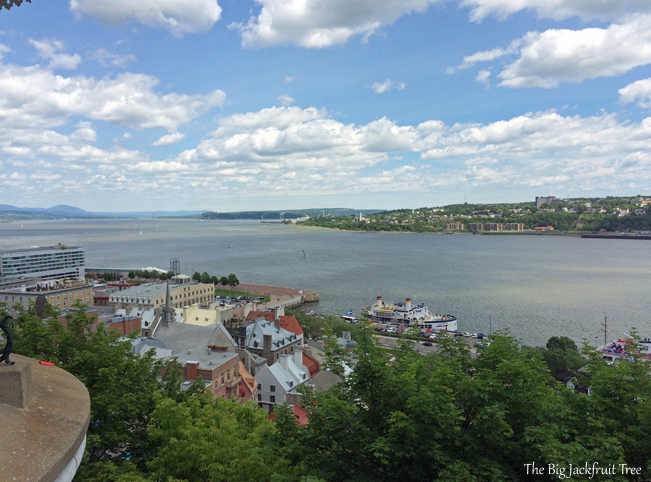
Obviously, I enjoyed the trip to the province of Quebec and especially to its capital Quebec City very much. Surrounded on three sides by the waters of St. Lawrence and St. Charles rivers, Ville de Quebec (Quebec City’s French name) is one of the oldest cities of North America.

 
QOQ-river

Quebec City was founded by Samuel de Champlain in 1608, a French explorer and diplomat. It was the first permanent European settlement in the territory of present-day Canada and the capital of New France, the French colony till 1867.

Old Quebec, a historical neighbourhood of Quebec city, is utterly charming. Its cobblestone streets and quaint shops bring forth images of Europe. No wonder Quebec City is sometimes called ‘Petit Paris’! Old Quebec is a UNESCO’s World Heritage Site.

 
QOQ-market1

Upper Town in Old Quebec is located on top of Cap Diamant (Cape Diamond) promontory, provides a beautiful view of the St Lawrence river below. A statue of Samuel de Champlain stands prominent on the square.

 QOQ-statue1

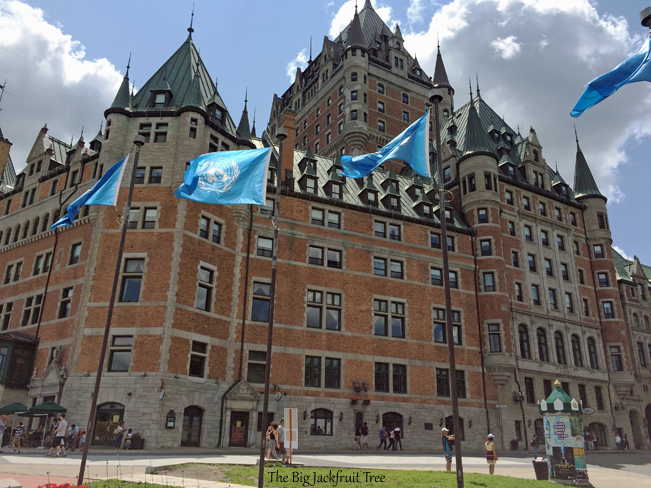
The Chateau Frontenac, said to be the most photographed hotel in the world, is an imposing structure and dominates the city’s skyline spectacularly.

 
QOQ-chateau-front

Built in 1893, the hotel was the site of the Quebec Conference in 1943, where Winston Churchill and Franklin D Roosevelt met to discuss world war 2 strategy. If you would like to check out the rates for a weekend’s stay, here is the link.

 
QOQ-chateau-front-closeup

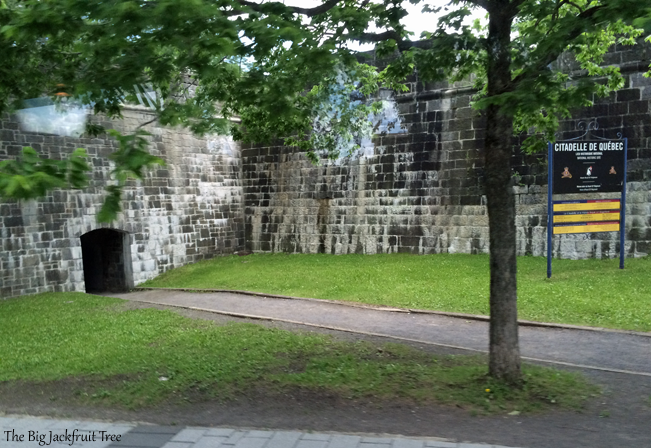
Also, located in the Upper Town is La Citadelle, a functioning fortress. Quebec City is the only fortified city north of Mexico. The ramparts of the city stand strong even today, along with the citadel. Work on the citadel was started in 1820, and guess why? To prevent attacks from the United States! Seriously… in 1812, the US had tried to conquer Quebec City and other parts of Canada which were British holdings while fighting a war with Britain over the blockading of the oceans by Britain. Needless to say, the attempt failed and today the citadel is a National Historic Site of Canada.

 
QOQ-citadel

Century-old great looking houses of the for-generations rich and famous populate the residential areas of Upper Town. Historical sites and beautiful parks add to the uniqueness of the area.
 
Lower Town, located at the foot of the Cap Diamant, is the commercial center of Old Quebec. This is the location where Samuel de Champlain built his original settlement, remains of which can still be discerned and are marked. I can doubtlessly say Lower Town is my most favourite spot in the entire city.

 
QOQ-street3

Place Royale, a public square was named so in 1686 after a bust of King Louis XIV of France was placed in the square. Once, this was the commercial center around where the merchants and businessmen lived, who during the French-British wars moved to the Upper Town for its safer environments.


QOQ-place-royale

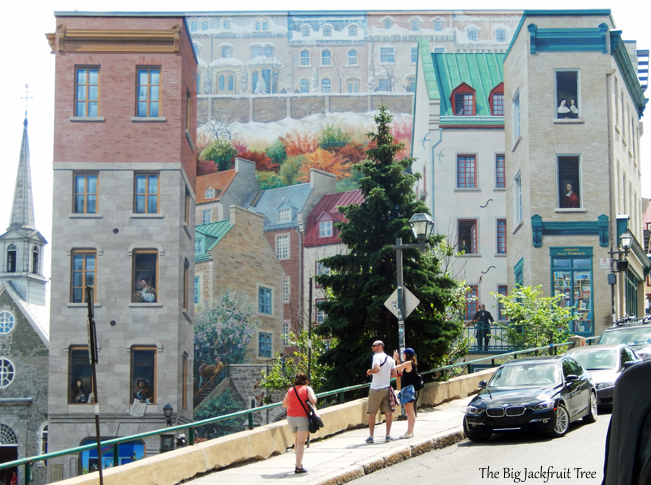
At one end of the square stands the Fresque des Quebecois (fresco for the people of Quebec), a huge mural on the face of a building. Completed in 1999, this mural encompasses the local history of 400 hundred years in a canvass of 420 sq meters.

 
QOQ-fresco

In addition to the daily life activities and the four seasons, 16 of the prominent historical figures are also represented. The details of the creation of this mural are very interesting.

 
QOQ-fresco1

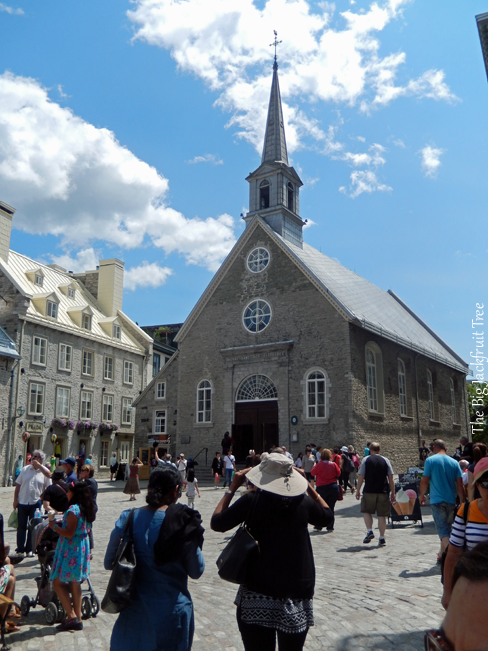
On the opposite side of the square is the Eglise Notre Dame des Victoires (Our Lady of Victory church). Built on the site of the Champlain’s first residence, it is one of the oldest stone churches.

 
QOQ-church1

And then there is the Rue de Petit Champlain, the most picturesque street ever.

 
QOQ-street2

In addition to wonderful arts and crafts shops and restaurants, the narrow stone-paved street has a little area with benches and swings and live music where you can sip your wine and chill out.

 
QOQ-street1

The whole Quartier Petit Champlain area is indeed beautiful.
 
By the way, Rue de Petit Champlain is the oldest street in North America! Yep, I know, I have been repeating the word ‘oldest’ a lot! 🙂
 
To be continued…

~Ria

23 Jul 2015

Drifting in Daylight in Central Park

Today is the official first day of summer, but the weather has taken on the airs of summer a while back. And what a summer it is shaping up to be! An imminent trip to Canada (Toronto, Quebec City, Montreal, Ottawa), an invite to a summer wedding in London and an end-of-summer visit to San Francisco… not to forget the list of events happening in and around the city and there you have the perfect recipe for a perfect summer!


Central Park, a joy to visit any time of the year, is at its best in the spring-summer seasons. Add to it an incredible art show nestled among the greenery and you have one of the best summer experiences ever!


Drifting in Daylight, organised by Creative Time in partnership with Central Park Conservancy, is an eight part performance, display and participatory show running for eight weekends at various locations in Central Park.


DDCP-Boat1

Starting at the northern end of the park, you see S. S. Hangover, a fishing boat reimaged to look like the boat in a party scene from the mystery movie ‘Remember Last Night?’ (apparently no one does; hence the name of the boat!) sailing on the Harlem Meer. The boat carries six musicians playing a classical composition by Kjartan Sveinsson, musician and composer.


DDCP-Boat2

Notice how fat the Pegasus (okay, plump; we don’t want to offend the creature!) on the flag looks? According to the Icelandic artist Ragnar Kjartansson, creator of the show, that Pegasus is a ‘symbol of the artist struggling to reach sublime heights’.


DDCP-Boat3

The first time I visited the show, it was sort of pouring and this was one of the two performances that went ahead despite the rain.


DDCP-icecream

What is the perfect symbol of sunset in a park? An ice cream cone, of course! Spencer Finch captures this symbol with his ‘Sunset in Central Park’ ice cream truck. The truck is fully powered by solar energy and the colour of the ice cream, varying shades of the sunset, is from the pigments extracted from a painting of a sunset over Central Park. He intends each soft serve cone, free of charge, as a poetic gesture revering the sun and nature in the park.


Central Park has always been a favourite spot for movie scenes to be shot. Taking inspiration from these movies, David Levine presents the show ‘Private Moments’. Scenes from eight famous movies are placed into their original locations, actors dressed like the characters re-enacting the scene in a continuous loop.


DDCP-bulletsoverbroadway

A scene from Bullets over Broadway


DDCP-theroyaltennenbaums

Another from The Royal Tenenbaums


So now when I see a person not dressed to suit the season, the first question is, “which movie?” 🙂


Karyn Olivier’s ‘Here and Now/ Glacier, Shard, Rock’ is a pictorial representation of the life of the park, connecting the past, present and future. It is a transformational signboard in three sections, which alters your perception every time you move. The scene fluidly transforms from the blue glacial waters which formed the rocky underpinnings of the park to the present day topography and back. The scenes are knit together by a shard of blue pottery from the Seneca village which was moved from the location so that the park could be established.


DDCP-billboard

Printed using the lenticular technology, the panels of the huge signboard evoke a true seamless 3-D vision.


‘Cartas al Cielo’ (Letters to Heaven, in Spanish), an artwork by Alicia Framis, presents a link between the earth and the sky or heavens, as reflected on the mirror-like surface of the sculpted form.


DDCP-globe1

Viewers are encouraged to write letters on the cards provided, addressed to someone who is not on this earth anymore. The cards, dropped into the globe, are collected and at the end of the show will be symbolically forwarded. Apart from the physical cards, the sculpture is a poignant reminder of the relationship of the earth and the sky and the here and the departed.


‘And all directions, i come to you’ is a contemporary dance performance that moves through the North Woods of the park. The dancers move through the rough pathways of the woods, their audience following them.


DDCP-dance1

Their presence is airy, their movements delicate, ethereal. Though choreographed, the movements seem so spontaneous and magical.


DDCP-dance2

Don’t let their gazelle-like appearance deceive you; these dancers are a hardy lot! This is one of the teams that kept performing all through the rain, that too on the muddy pathways of the woods!


DDCP-dance4

Presented by the conceptual artist Lauri Stallings and performed by nine artists from Glo, the experimental performance platform founded by Stallings, this is one show that you can watch for hours without the fear of getting bored ever.


Central Park is a haven for bird watchers… And Nina Katchadourian’s ‘The Lamppost Weavers’ replicates the habits of birds of using human objects for building nests. Made out of basket balls, footballs and old shoes, these points out the connection between wild life and human utilitarian items.


DDCP-bird-nest

These pseudo birds’ nests hang from the lamp posts, but the Department of Transportation did not want the real lamp post arms used for anything other than actual lamps. So the curators of the show had to build pseudo arms to hang them from!


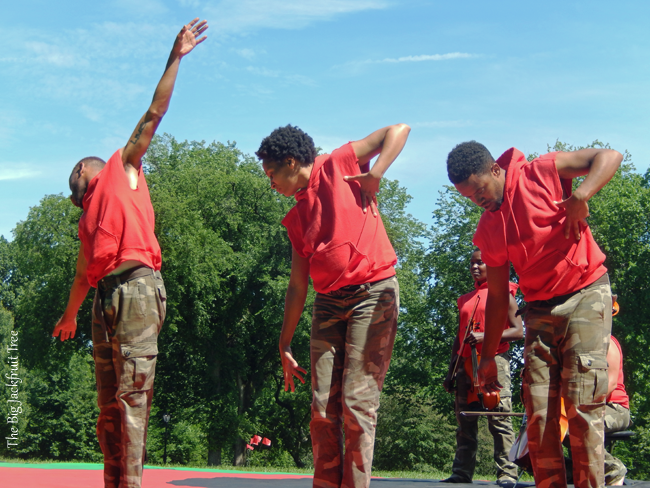
‘Black Joy in the Hour of Chaos’, presented by Marc Bamuthi Joseph, is an animated, energetic performance of dance, music and poetry. Inspired by present day racial politics, the performance looks back to the movements in the African-American history and the legacy of hip-hop.


DDCP-joy1

Following the style of the second line parades of New Orleans, the performance, on the Great Hill of the park, is lively and vibrant.


DDCP-joy2

Each of these shows is unique and contributes to making the whole an unforgettable experience.


Drifting in Daylight forms the center piece of Central Park Conservancy’s 35th anniversary celebrations this year. What is special about this show is the way it deviates from the typical performance or installation art. It has that element of surprise that adds to the thrill of enjoyment, as you discover each of the pieces along the meandering paths. And as you make that discovery, you also discover that each artwork fits so perfectly and naturally to its surroundings as if born right there!

~Ria

21 Jun 2015