Author Archives: Ria

An Amazing Street Play

Back in New York… or shall I say the freezer? I had thought that below a certain level of cold – say minus 10 – it is all the same, which is too cold. But no, no, no… there are 50 shades of cold below freezing! And the bone chilling, face freezing cold of this winter of 2015 is the worst I have ever known. One look outside, and I was ready to get back on that plane and go back for another two months! That too, after a flight of 14 hours… Yeah, exactly like Punxsutawney Phil who saw his shadow on Feb 2nd and went back into his burrow for another 6 weeks of slumber!
 
Okay, let me be honest here… I did escape a major part of the brutal winter.:-)
 
Spent about two months in the beautiful tropics. Of all the things I managed to see and do this time around – blue oceans with sandy beaches, hikes on green mountains, visits to tea estates and factories, houseboat rides on backwaters – what has made a lasting impression on me is a street play I saw in Calicut, Kerala… yes, that sliver of a state in the south western corner of India.
 
KSSP-banner

The aim of the play was to focus attention on the rise of superstitions and their exploitative tendencies in the Kerala society.
 
KSSP-climax

It was organized by Kerala Sasthra Sahithya Parishad (KSSP: Kerala People’s Science Movement – not a literal translation).
 
KSSP is a unique social scientific movement in Kerala that came into being with the dual aims of bringing science and scientific thinking to the common people and influencing the direction of scientific research into channels that will benefit the people. It is unique in the sense that among all the socially relevant popular movements anywhere in the world, there is no other such organisation that has an exclusive focus on science and scientific mindedness. And if Kerala has topped the United Nations Human Development Index despite its high population density and low per capita income, making it stand apart from the rest of India, KSSP and the scientific temper it has managed to popularise, have a major role in that achievement for sure.
 
The brainchild of a group of scientists and science writers, KSSP was formally established in 1962. KSSP’s concentration on active communications and education has paid off big time, making it an integral part of the Kerala social fabric. KSSP is the largest publisher of science and technology themed books in the state of Kerala. It also publishes four periodicals, two of them meant for children. Science quizzes and talent tests are conducted at primary and secondary school levels and science clubs are organised throughout the state. KSSP has carried out successful campaigns against industrial pollution, deforestation, unwise water management policies, etc.
 
KSSP-lamp1

In addition to traditional outreach mechanisms like lectures and symposiums, and articles published in newspapers, KSSP uses ‘kala jatha’, an art form encompassing elements of street theater and folk story telling traditions to increase awareness and nurture a scientific outlooks among the population. Teams travel throughout the towns and villages of the state performing in front of audiences large and small. The kala jathas spread socially relevant messages based on scientific facts and generally promote scientific thinking and reasoning among the populace.
 
KSSP-religions1

The performance that I was fortunate enough to see was part of ‘Nattu Pacha’. Google Translate gave me ‘indigenous green’ as the English synonym, which even I know is nowhere near the intended meaning… would ‘the goodness of the countryside’ work? Roughly, I would say.
 
KSSP-lamp3

As part of Nattu Pacha kala jatha, ten groups of performers travelled throughout the state and performed the play at over 400 venues. The main factor behind the success of the effort is nothing other than the dedication of all those involved.
 
KSSP-religions2

I do not remember the names of the actors; this was not a performance that hinges around a few stars… this was a joint venture in the true sense of the word. With the minimum of props and costumes, the actors brought out the story of what happens to a hitherto peaceful village when religious powers, supported by exploitative commercial interests, move in and take control of people’s minds.
 
KSSP-rope1

It was like, in a manner of minutes, a barren playground turned into an elaborate stage, riveting the audience’s attention.
 
KSSP-rope2

The ease with which the actors slipped in and out of character is amazing, especially when you consider that none of the participants are professionally trained actors. And I loved the background singers who equaled if not surpassed the actors.
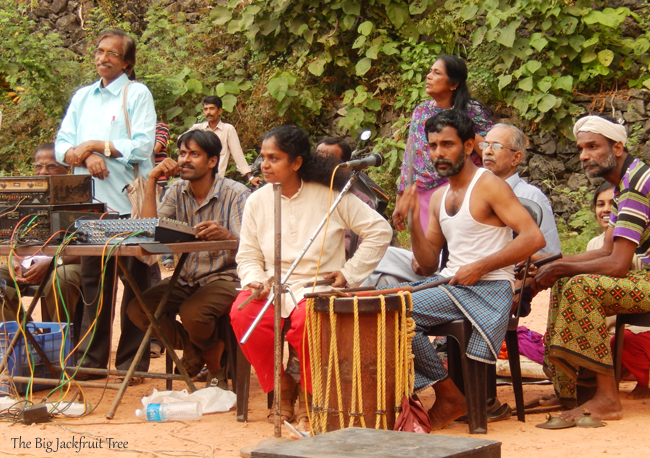
 
KSSP-background

The next time I’m in Kerala, the first thing on my to-do list will be to check for any interesting activities organised by KSSP!
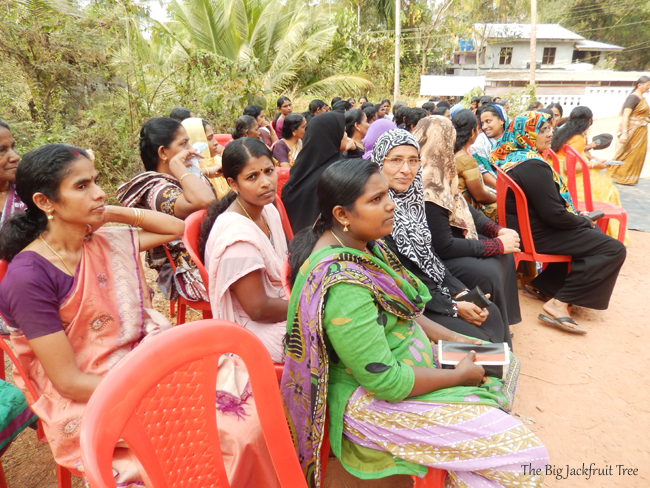
 
KSSP-audience

~Ria

P.S. I’m sorry that in a small blog post, it is not possible to even touch upon all of KSSP’s activities; so, read about it all at the KSSP’s own website.


22 Mar 2015

Thangassery… a Gem on the Seashore

After visiting my friend Dilly at Thangassery, I had this question that I could not find an answer to… why hadn’t I visited the place earlier? Dilly and I have been friends for donkey’s years, I knew of the beauty and historical importance of the place… maybe it is true that there is a right time for everything!

 
TGS-tangy-view-right1

Located near Kollam in the south western state of Kerala in India, Thangassery is a beautiful seashore town with a unique cultural heritage. Established as home to the Anglo-Indian community (which includes all people of European descent), its contributions to the cultural milieu of the region are invaluable.

 
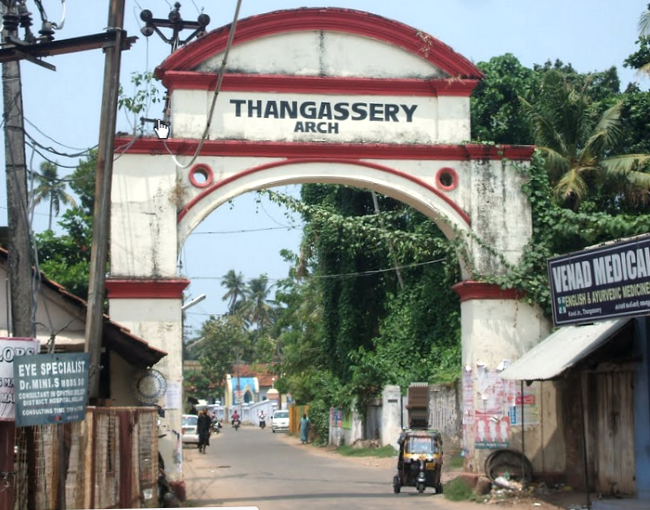
TGS-tangy-arch

The word ‘thangassery’ means gold town or gold village, referring to the distant past when spice trade was conducted here using gold coins. It was also known as ‘Dutch Quilon’ till the 20th century.

Thangassery has a long history, going back to the colonial times when European powers jostled for domination in the Eastern territories. The first European power to appear in Thangassery were the Portuguese, who leased the area of Thangassery from the queen of Quilon (currently called Kollam) in the year 1502, to be used as a trading post. The dilapidated remains of Forte de São Tomé (Fort St. Thomas), built by the Portuguese in 1518 to protect their enclave, can still be seen in Thangassery.

 
TGS-tangy-fort

The fort that rose up to a height of 20 feet, is under the care of Archaeological Survey of India and is currently being restored.

After almost a century and half, the decline in the Portuguese power in Europe and the colonial territories led to a Dutch victory at Quilon. In 1661, Fort St. Thomas and Thangassery passed into the hands of the Dutch, who developed the area further. After another century, the fortunes of the British were on the ascendant and the Dutch had to surrender Thangassery to the English East India Company in 1795.

 
TGS-tangy-shore1

Many of the Portuguese and Dutch soldiers and traders had married locally and settled in Thangassery. This cultural mixing has always enriched the life of Thangassery in many ways. The grid pattern of the roads existing in Thangassery town even today was established by the Dutch. The only other place where I have seen such a perfect grid of roads is my own town, NYC! 🙂

 
TGS-tangy-view-right3

There are several food items that have come out of this mixing of cultures, where local ingredients available in the tropical climate of Kerala find a place in traditional Portuguese and Dutch recipes and get reborn as amazing items. And I thought I had tasted them all. Imagine my surprise when I discovered ‘orappam’, a kind of white halva with a definite coconut flavour, that belongs right at the top with the best of them!

 
TGS-tangy-shore2

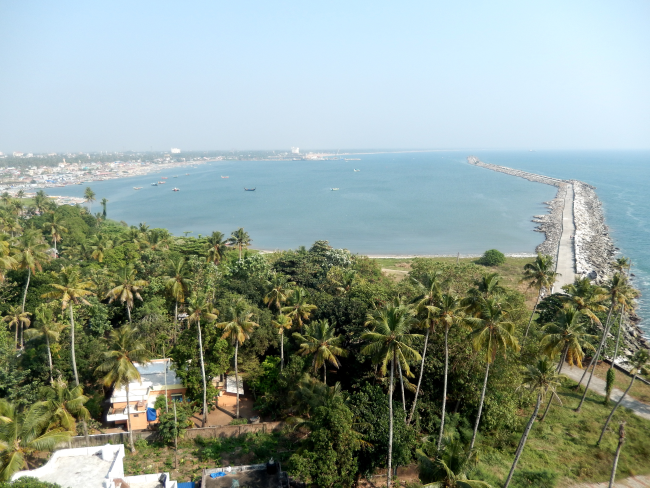
Thangassery lighthouse, established in 1902 and still functional, is one the attractions of the place. The view from the top of the lighthouse is worth every one of the 193 steps you have to climb to get there.

 
TGS-lighthouse

Starting with the tranquil basin of Kollam port protected by the Thangassery breakwater, extending 1.1 mile into the sea…

 
TGS-quilon-port

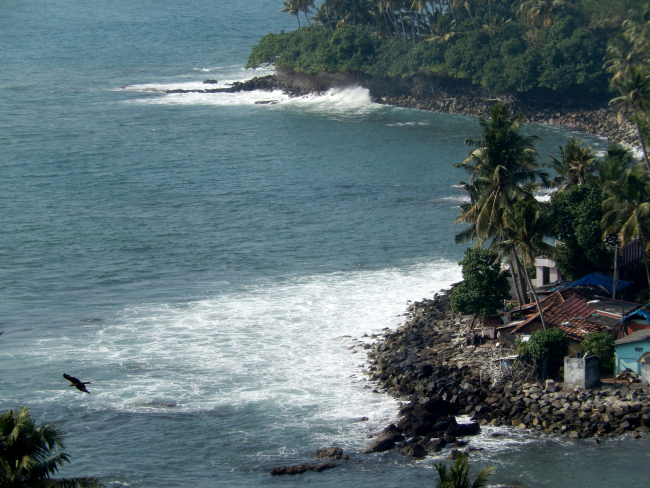
your eyes will sweep over the vista of the Arabian Sea in a 270 degree arc to land again on a rocky shoreline studded with graceful coconut palms.

 
TGS-tangy-view-right2

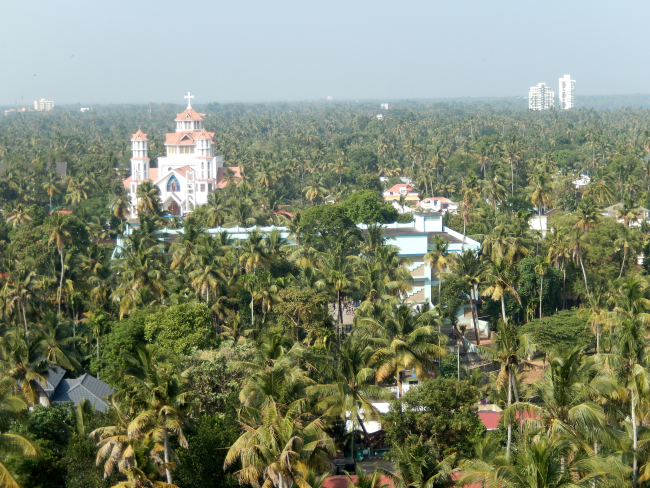
Moving further, your gaze will settle on the green landscape dominated by the church steeple…

 
TGS-tangy-view-from-lighthouse1

to end up back at the colouful fishing boats pulled on the shores along the Thangassery Beach Road.

 
TGS-boats

A view that you will never tire of, I can guarantee!

 
TGS-lighthouse2

The circular wooden staircase of the lighthouse itself is a work of art.

 
TGS-tangy-lighthouse-staircase

Standing at a height of 144 feet, the lighthouse has a luminous range of 26 nautical miles. The lighthouse has been in continuous use since its inception.

 
TGS-lighthouse3

One of the oldest printing presses in India from where the first book in Kerala was published in1578; Mount Carmel Anglo Indian Girls School, the first convent schools for girls established in 1885; the Infant Jesus Church, a Portuguese-built church that goes back centuries… Thangassery’s claim to fame are many. Still, old timers here are quick to point out the changed circumstances in the town. Large scale migration of the younger generations seeking better fortunes has taken its toll on the local community. Old life styles are disappearing with the influx of outsiders into a hitherto close-knit community.

Though many believe that the golden years of Thangassery are long gone, I found the place charming and delightful. My only regret is that I did not make this trip a long time ago!

I have posted a bunch of photos from Thangassery here…


~Ria

01 Feb 2015

A brand new year… with no elephants!

If there is one event that signals the winter festive season in New York, it is the lighting of the Rockefeller tree. This season it was to be on Dec 3rd. And of course, I wanted to go and watch the tree come alive in all its glory. But alas, it was not to be. NY police barricades to control street protests against police actions that question even the motto of ‘Courtesy, Respect, Professionalism’, had effectively prevented any public access to the tree lighting ceremony. Did the shadow of the conflict between the police and mayoral institutions put a pall on the city’s annual festivities? Or was it just my imagination?
 

Anyways, I was happy to escape from the cold, literally as well. Adding to my thrill was an invite from an old old friend (no, the friend is not old; only that our friendship goes back a long way!) had invited me to go visit her in her hometown in Kerala. The plan was to combine some local sightseeing with all the catch-up from the past few years. An excellent start to a new year!
 

The first stop on our travel was Periyar National Park and Tiger Reserve at Thekkady, on the border of the southern Indian states Kerala and Tamil Nadu. Formerly known as Periyar Wildlife Sanctuary, it was declared a national park in 1982.
 

ABNYWNE-reservoir2

We had booked rooms at the Periyar House, within the boundaries of the park. What awaited us at the entry gates to the park was bad news… no vehicles are allowed inside after 5.30 pm! And we were about three hours late! The security guards assured us that this was for our own protection as the wild animals tend to wander at night, and may not like our presence. They told us stories of how a herd of a dozen elephants had gone up to the doors of the Periyar House on New Year’s eve.
 

ABNYWNE-periyar-house

But then we saw many vehicles being let inside. Those are forest guard trainees and they live inside the park as well, we were told. We couldn’t imagine any wild animals that would selectively attack only visitors, leaving the forest guard trainees alone. So we decided to argue our case. After much telephoning over the next hour, finally we were allowed to enter, with the warning that we should get to the guest house and go in with the least amount of noise.
 

ABNYWNE-view-periyar-house
View from Periyar House
 

Along the mile-long drive to the guest house, we looked around with anticipation… to no avail. No elephant, no tiger, not even a wild squirrel! Was it a harbinger of things to come?

Periyar National Park covers an area of 300 sq. miles, most of it covered by evergreen forests. The central attraction of the park is an artificial lake, formed when a dam (Mullaperiyar) was built across the Periyar river. A boat ride on the lake is a ‘can’t miss’ activity when you visit the area.
 

I have seen innumerable photos of elephant herds frolicking in the waters of the Periyar lake, brought back by visitors. So it was with heightened anticipation that we got on the boat the next morning. And, if we were lucky, we could even see a couple of the majestic Bengals… of course, of the tiger variety, not Cincinnati! After all, the area has a population of over 40 adult tigers!
 

ABNYWNE-reservoir1

The enchanting view of layer upon layer of mountain ranges surround you as you embark on the boat ride. Stumps of the trees that got submerged when the lake was created can still be seen sticking out of the waters of the lake.
 

ABNYWNE-stumps

Water birds find these tree stumps ideal for nesting.
 

ABNYWNE-nest-on-stump

For the entire boat trip, our eyes scanned the shores looking for animals come to drink from the lake. No luck whatsoever! All we saw were a few wild boars on a far shore, that too, only for a couple minutes. As we got off the boat, I could hear mutterings… ‘maybe it was too hot for the animals’, ‘maybe another day’… yeah, maybe another day.
 

Though 35 species of mammals live in the area, the only ones we saw were bonnet macaque monkeys and Nilgiri langurs.
 

ABNYWNE-black-monkey

The bonnet macaques, called so due to the tuft of hair on their heads that resembles a bonnet, are very common here.
 

ABNYWNE-bonnet-macaque

We even had one visit us at our room window, probably looking for a snack!
 

ABNYWNE-visitor

The area is well known for its 143 species of orchids, in addition to a wide variety of other flowering and medicinal plants.
 

The concept of ecotourism is taking strong roots in Periyar National Park with programs being run with involvement from the local communities. Among the wide variety of activities are bamboo rafting, nature walks, guided treks, adventure trekking and camping.
 

ABNYWNE-bamboo-raft

For me, surely there is gonna be a next time… elephants willing!

~Ria

21 Jan 2015

New York City Marathon… a not to be missed event!

Someone recently asked me… what’s so special about the marathon? Why are people, generally not interested in athletics, so keen on running it? The easiest answer was ‘prestige’. Prestige and pride. The sense of accomplishment. The immense way it makes one feel good about oneself.

NYCM-big-group4

It is not about the running – in fact, running is the least of it – it is all about one’s self perception. The discipline and dedication needed to get to the level of training required for a marathon is tremendous. And of long duration. To prove that one can adhere to the punishing schedules with the accompanying scarifices for as long as it takes, to oneself more than to any others… there are not too many achievements that compare, at least in my opinion.

NYCM-small-group3

Training for a marathon brings structure and organisation to one’s life, often calling for life style changes. The fact that one can take all that in stride, and focus on a goal not tied to any financial goals… isn’t it proof enough of a person’s strength of character? Yes, that’s it… being able to prove that one has that kind of grit and purpose is what makes it so great. And of course, the bragging rights granted for life, doesn’t hurt either! 🙂

NYCM-big-group2

Spectators line the entire 26.2 miles – 26.219 miles to be exact – of the route the runners take, cheering them on. They bring placards and signs and personal messages to encourage the runners. The spectator involvement is so great that it actually amounts to a vicarious participation in the event. The energy of the crowd is palpable and contagious.

NYCM-small-group4

I went there to see the event and take some pictures… and came back with a hoarse throat with all that cheering!
 
The New York City Marathon route passes through all five boroughs of New York City, starting in Staten Island and going through Brooklyn, Queens, Bronx (passing through Manhattan) and ending at the Central Park in Manhattan. It is held on the first Sunday of November.

NYCM-big-group3

NYC Marathon has the largest participation among all the marathons run anywhere in the world, with both professionals and amateurs participating. Anyone who will be 18 years of age or older on November 1, the following year can participate in the race. This year, 50,530 participants finished the race with an average time of 4 hours 34 minutes and 45 seconds.

NYCM-small-group5

Wilson Kipsang of Kenya won the 2014 NYC Marathon, along with the $ 500,000 World Marathon Majors championship, with a timing of 2 hours 10 minutes and 59 seconds. The second place – with a difference of 7 seconds, yes… seconds! – was taken by Lelisa Desisa of Ethiopia.

NYCM-big-group7

Among the women competitors, Mary Keitany claimed the first place with a timing of 2 hours 25 minutes and 7 seconds, just ahead of Jemima Sumgong by 3 seconds, both of them from Kenya. Mary Keitany placed third in 2010 and 2011, but hadn’t run in the race the last two years as she was on maternity leave.
 
The NYC Marathon is organised by New York Road Runners and has been held every year since 1970, except in 2012 when Hurricane Sandy made landfall around that time.

NYCM-small-group11

Demand for participation is so high that runners are selected by a lottery system. The start of the run is at 10:10 a.m, though it is regulated by a staggered start for different groups. The time limit for the completion of the run is 8 hours 30 minutes.
 
Running time is recorded by a computer chip attached to the runner’s bib, which records the crossing of timing mats located along the course.
 
Several TV stations in and around New York broadcast the marathon live. It can also be watched online.
 
However, the NYC Marathon is not just an ego boost for the runners; it has a major economic impact as well. Through the event, millions of dollars are raised for non-profits and charitable organizations. It also generates millions of tourist dollars for New York City.

NYCM-special4

Several organizations support their own team of runners and have an active presence at the marathon over the years.

NYCM-special2

Guides running with a participant in a wheelchair to help him along. In 2000, a new official division was introduced for participants using wheelchairs and handcycles.


NYCM-special3

Some of the messages on the shirt fronts of runners are quite interesting. This guy has definitely scored some points with his honey!


The runners have their names on their official bib and often on their shirts. We, the spectators, are encouraged to cheer by name, especially if we see someone tiring. However, we were told not to shout “almost there” as it might have a negative impact!
 
 
You can always see some interesting costumes at the run.
 
 
NYCM-special1

If you ever – ever – feel dispirited, inadequate, lethargic… or are on the brink of giving up on anything, all you need is a visit to the NYC Marathon to change your mood, to pick you up, to boost your candoo attitude sky high! The cheering of the crowds is enough to pick you up and hasten your footsteps even before you reach the runside! If you haven’t done so already, do add it to your bucket list!
 
BTW, I saw my first Salvation Army bell ringer of the season today… Also, holiday muzac is on everywhere… in the malls, in the elevator, even in the train station! WooHoo!
 

~Ria

23 Nov 2014

Zombies, Zombies Everywhere… Are You Scared of Them?

It is not that New Jersey lacks a place in the Guinness Book of World Records… no, not at all. The tallest sand castle… the most wooden train whistles blown at once… fastest time for carving 1 ton of Halloween pumpkins… largest group Stop, Drop & Roll demonstration, whatever that is…. New Jerseyans hold plenty of world records. But the one that was lost… the one that slipped through, that was the most precious of them all! Yes, I’m talking about the one for the Largest Gathering of Zombies!

 
ZW-record
In October 2013, the Zombie Walk at Asbury Park boardwalk wrested the honour from the Twin Cities, Minneapolis-Saint Paul, with 9,295 zombies parading and partying till late. But alas, Asbury Park and New Jersey lost this year on October 12, when Minneapolis assembled 15,458 zombies! Come October 2015, it will be an interesting contest to watch. Of course, my money is on the Garden State! 🙂

 
ZW-single-zombie2
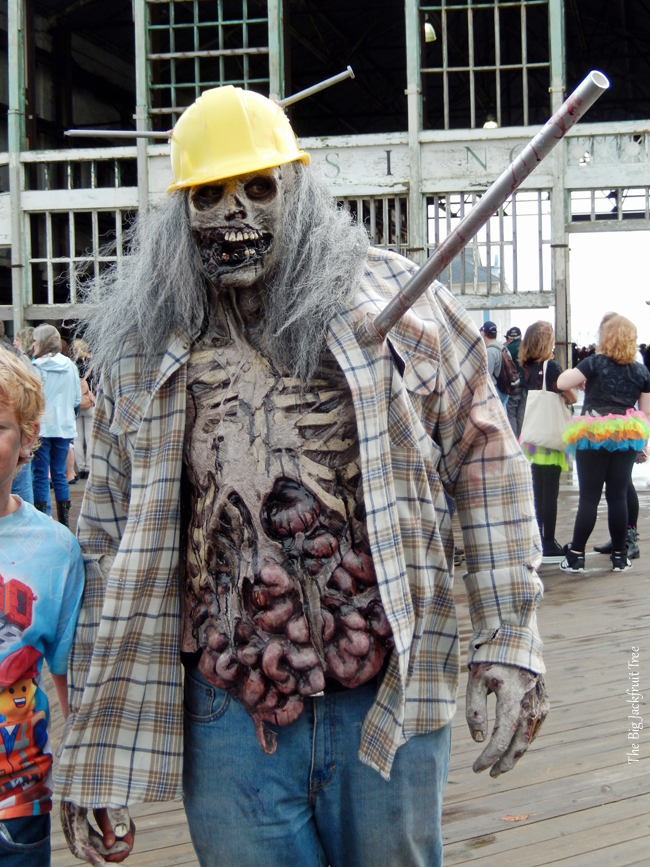
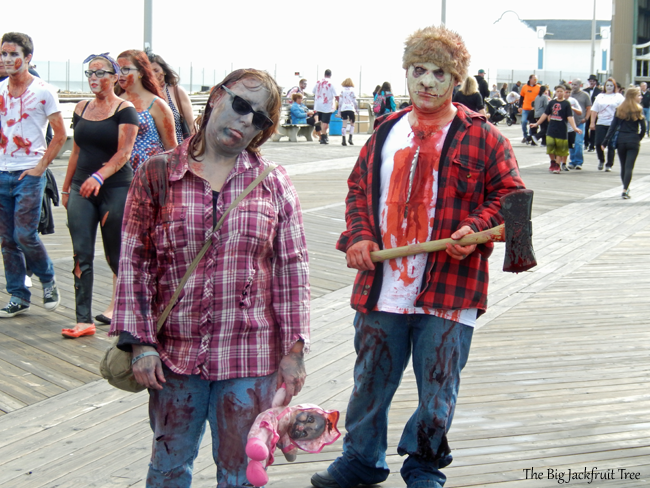
A Zombie Walk is an organized gathering of people who dress up as and pretend to be the ‘living dead’ or zombies. Usually, there is a parade where they get to flaunt their clever costumes and the fantastic makeup. And boy, is some of that makeup inspired!

 
ZW-two-zombies1
The general idea is to create a sense of horror and revulsion, often providing clues to how they met their ends.

 
ZW-two-zombies5
Looking at some of the getups, I was really wondering how it was achieved and how much time was spent in the effort.

 
ZW-two-zombies4
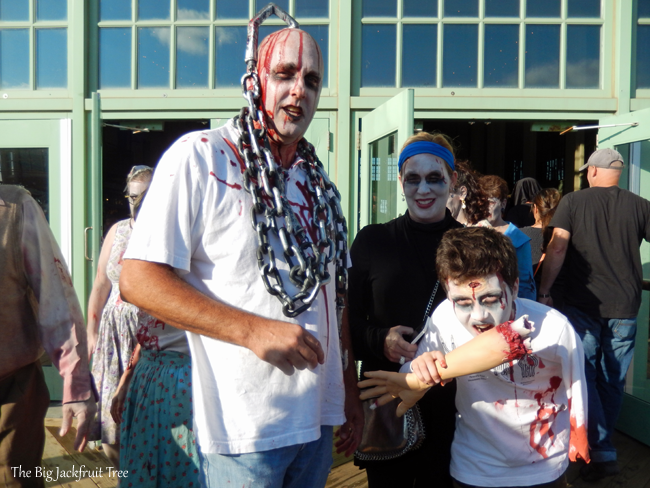
And blood… copious amounts of blood poured liberally all over. Often, free blood is advertised and distributed by the organizers to ensure that the lack thereof doesn’t make the gore any less scary!

 
ZW-two-zombies2
The lurching, stumbling, groping way a zombie is supposed to walk, with eyes skywards and arms extended, must definitely have originated with the zombie themed movies.

 
ZW-zombies2
And how some of them keep in character throughout the walk is amazing! But then, there are others who cannot resist the temptation to smile for the camera, forgetting that it is totally un-zombie like behaviour! 🙂

 
ZW-zombies1
Initially small zombie gatherings used to take place in the flash mob or improve style, mostly spur of the moment affairs.The first official zombie walk was in Toronto, in 2003. A small group of people, intent upon saving Halloween from commercialism and putting horror back in Halloween, dressed themselves up as the walking dead and shuffled through unsuspecting neighbourhoods.

 
ZW-two-zombies3
It became an annual affair, growing in size every year, with zombies in their thousands participating in the recent years.

 
ZW-zombies3
From Toronto, it spread to other cities. Currently most major cities, all over the world, have organised Zombie Walks, with the spirit of competition growing as well.

 
ZW-two-zombies6
In addition to run of the mill zombies, some participants represent characters from history or fiction.

 
ZW-two-zombies7
She must be the youngest participant this year!

 
ZW-single-zombie1
The Asbury Park Boardwalk where the annual New Jersey Zombie Walk takes place.

 
ZW-asbury-park
The parade along the boardwalk.

 
ZW-boardwalk
And maybe I haven’t seen enough zombie movies, I’m yet to understand why they hanker after ‘brains’!


~Ria

21 Oct 2014