General

Why Oh Why?

It all started in the week before I was scheduled to start on my winter vacation. This was a planned vacation, tickets booked a while back. Still, you know how it is… you plan all the things you need to do before you go, and you have every intention of sticking to those plans… then somehow things happen differently and you are left scrambling at the last minute. What I cannot understand is how this is the case every year, every vacation. But I digress…

So it was the week before my travel. Came back from work Wednesday evening. Entering the apartment, I can already see the flashing lights reflected on the window panes.

Looking out the window (being on the second floor, I do have a good view of the street), I can see two cop cars parked among the small hillocks of snow on the sides of the street. Suddenly I realise… the snow hills on the near side are no longer there. Instead there is a muddy stream meandering towards the rainwater drain at the end of the street. Oh no! Water main break… No wonder, considering the below freezing temperatures we have been consistently having. And it was apparent that the problem was with the main pipe that supplied water to our building.

So the smart aleck that I am, I ran to the kitchen. Put a cooking pot under the tap and started filling it with water. Already the flow of water was slowing down. As I watched, the tap spluttered a few times and the water stopped. I was not worried. Enough drinking water in the house, and of course water will be back the next day.

Next day, went to work as usual. Around 4 pm, as I’m getting ready to leave for home, my phone rings. It is Mr J, our condo president. ‘Ria, where are you? Can you get home right away? The water was turned back on a while back, after the repairs, and there is flooding in your apartment.’

The kitchen tap… I had forgotten to close it last evening! All the way home, all I could think of was, all the things I will have to throw away because of water damage. The bottom rows of my book shelves were sure to go… Gosh, all the heavy classics are on the bottom shelves…

By the time I reached home – Manhattan traffic is so unmindful of your personal emergencies! – three of my friends were waiting to help me with damage control. We rushed up. No water coming out under the door. I gingerly opened the door… expecting to step into squelching water. Nothing. Looked into the bed rooms… no problem there. Moved on to the living room… the floor is dry as a bone. Then to the kitchen… yes, the floor has patches of water puddled here and there. But beyond that, no sign of flooding at all.

What had happened was that the water had seeped under the dish washer and the floor cabinets in the kitchen and gotten to the outside corridor under the wall. And to prevent it getting to the apartment across the corridor, Mr J had the water turned off. What a relief it was, to see all the horror scenarios in my mind come to nought!

Wiping up the remaining water was a matter of minutes. And my friends insisted on celebrating my transition from panic to relief in a short hour by treating me to takeout pizza. 🙂

To be continued…

~Ria

12 Feb 2014

Performance by Ndere Troupe – A visual treat indeed!

Dance has always been a passion for me. However, my first encounter with dance did not go well. 🙂 When I was just three years, I was put in a dance class run by my school as an after class activity. To my surprise I still have a vague memory of that class packed with 25–30 children of different age groups, trying to copy what the instructor was doing. I got so disillusioned after the first class that I adamantly refused to go to the class any more. Then at the age of eight I had the opportunity to join a professionally run dance school (apparently my parents recognised the interest I I have in dance) and from then onwards dance has always been a part of my life. Never miss a chance to perform or watch various dance genres.
Dance has always been an important part of celebrations, ceremony and entertainment. It’s difficult to say when dance has become a part of human culture. The Egyptian tomb paintings depicting dancing figures from 3300 BCE and 9000 year old Bhimbekta rock shelters paintings in India indicate the prevalence of dance even in prehistoric times. Dance figurines were a permanent feature of ancient temple architecture.
Dances are usually performed as a mode of expression, as part of healing rituals or as an offering to God. Dance forms are also used as a tool to communicate with people about social evils, prohibiting the progress of the society. Ballet, bharatnatyam, hip hop, rumba belly dance, calypso, gigue, lap dance… there are sooo many varieties of dance we enjoy today.
The entertaining performance of traditional Ugandan dance and music by Ndere Troupe is what initiated these thoughts on various dance forms. I’d watched traditional Ugandan dances many a time. But getting to enjoy the playing of musical instruments, singing and dancing in a serene ambience in the amphitheatre at the Ndere Centre was an entirely unique experience. To quote from Ndere Troupe’s website, “In Africa written words didn’t exist, thus Africa’s cultural history, literature, knowledge and wisdom were recorded and passed on to succeeding generations through the medium of performing arts music, dance, storytelling and poetry.”


dances of Uganda 1

The programme started with playing of various instruments and singing.

dances of Uganda3a


dances of Uganda2

Kiganda dance from Buganda was originally only to be performed by the people of Obutiko clan and only in the palace.

dances of Uganda5dance of Uganda6

Dance of Bunyoro tribe. Bunyoro tribe belongs to the Toro region in Western Uganda. This is a courtship dance. Men and women sit around a fire reciting poems. Then men start dancing in front of each girl and the luckiest one gets chosen.

dance of Uganda7

Banyankole are the people who belong to the Ankole tribe, one of the four traditional tribes of Uganda. They are from South Western Uganda. This region is also famous for the Ankole cows with their distinctive curved horns.

dance of Uganda8

Dancers of Alur tribe hail from north western Uganda. One of the main instruments they play is called an Adungu.

dance of Uganda10
These are the dancers of the Acholi tribe. They belong to the Luo Nilotic ethnic group from northern Uganda.

dance of Uganda11

The percussion ensemble from Burundi , another east African country, was quite amazing. They came in balancing the heavy log drums on their heads drumming and singing. These drums are made from the trunks of a tree which grows only in Burundi.

dances of Uganda9

Intore (the dance of heroes) is the most famous traditional dance form of Rwanda, another east African country.

collage
It was a visual treat indeed. This post will not be complete unless I mention the tasty Ugandan meal which we all enjoyed after the performance.

Min

10 Feb 2014

Sunset at Kappad Beach

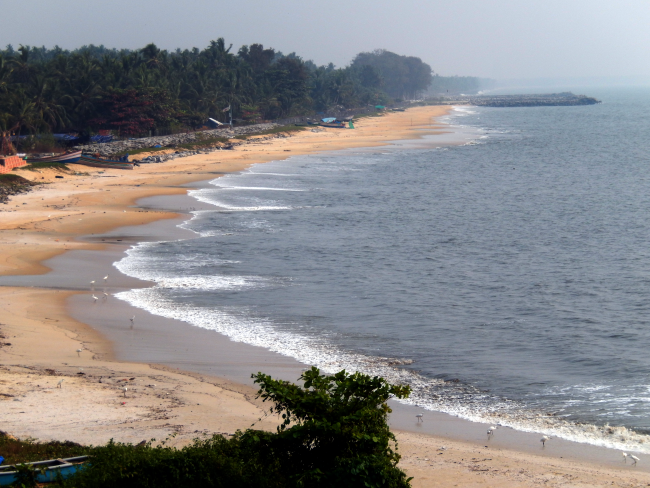
Global awareness, global warming, global politics, global citizen, global governance… the word ‘global’ has become part of our daily conversations. It is hard to imagine a world where you cannot pick and choose goods and products from all over the globe. We are truly enjoying the fruits of globalisation. I was reminded of a significant historical incident on the route to this globalisation, when I visited Kappad, a beach on the Malabar coast on the south western shore of India.kappad-beach2
In 1453 Ottoman Turks, under the leadership of Sultan Mehmed II, conquered the city of Constantinople, after a siege that lasted 50 days. With the fall of Constantinople (the city was renamed Istanbul), the Ottoman Turks cut off the overland caravan routes that were essential to the spice trade between Europe and countries in Asia that produced spices like cinnamon, cassia, cardamom, ginger, and turmeric.
Meanwhile, the demand for spices which were scarce and costly kept growing in Europe. In addition to flavouring food, spices were valued for their medicinal qualities and as a status symbol.
Finding a sea route to India became an immediate need. Tales carried by travellers, of the fabulous wealth of the East, also fuelled the quest. It was under these circumstances that King Manuel of Portugal commissioned an expedition to India under Captain-Major Vasco da Gama, who set out with four ships on July 8, 1497. After much hardship, Vasco da Gama landed at Kappad near Calicut (of Calico fame) on May 20, 1498. Thus was started an era of strife and competition and warfare among the European nations for mastery over the land and wealth of the East. At the same time, it also was the beginning of cultural and commercial interactions on a global scale.kappad-beach1
Calm, serene, peaceful… these are the words that best describe Kappad beach today.
The place is very beautiful and quite. Rocky formations extending into the ocean on either side of the sandy beach add an extra charm. The huge rocks can easily be climbed and provide wonderful views.
On a regular day, the beach is not crowded at all.
It is glorious to sit on the rocks and watch the sun setting in the Arabian Sea.

The old temple on one of the rocky formations is quite charming.temple
If you are an early bird and get to the beach, in the morning when the fishermen’s boats land, you can buy almost live fish, including the fabulous pearl spots.

Pearl spots taken through their natural progression (unfortunately, not from Kappad)

Pearl spots taken through their natural progression (unfortunately, not from Kappad)

A pillar near the beach commemorates Vasco da Gama’s landing at the Kappad, which used to be known locally as Kappakadavu. pillar

~Ria

divider-recipe-end

Interesting note
The early stories about the mysterious East were so full of fantasy… In the 7th century, Europeans believed that pepper grew on trees guarded by serpents. The only way it could be harvested was by setting the trees on fire, which would frighten the serpents away. May be that would have explained why pepper was black… 🙂divider-recipe-end

07 Feb 2014

Orange Chiffon Cake

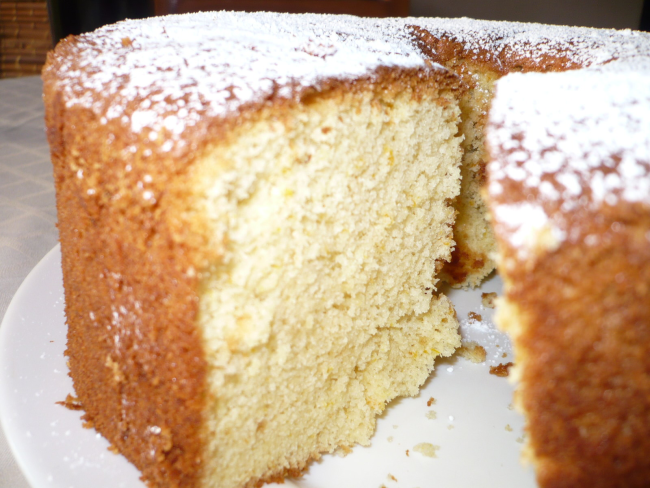
It’s still fresh in my memory… the white, airy and light cakes that my sister used to send me many years back. I did not know then (rather I didn’t bother to find out) that it was an angel cake. Later when I got hooked to baking, I always wanted to bake chiffon cakes and angel cakes. But couldn’t for want of a tube pan. Finally this Christmas Gaia brought me a 10 inch Wilton tube pan. Though I wanted to make a chiffon cake before she went back, couldn’t manage it as we were very busy with other plans.

firstslice

So I was waiting for a chance to use the pan. And when our wedding anniversary came around on the 2nd of Feb, it was the perfect occasion to make an orange chiffon cake. Moreover the fact that my husband neither likes iced cakes nor chocolate cakes is all the more reason to bake an orange chiffon cake.

ingredients


Chiffon cakes are very light and airy and made with lots of eggs, oil, sugar, flour and baking powder with any additional ingredient to flavour the cake like orange, lemon or chocolate, as per your preference. The use of oil instead of butter makes the cake really moist and keeps the cake soft even after a few days in the refrigerator. I used both freshly squeezed orange juice and orange zest to achieve the fresh orange flavour in the cake.


eggs


Chiffon cakes attain their fluffy texture through stiffly beaten egg whites folded into the cake batter just prior to baking. A few points to bear in mind whenever egg whites are beaten to stiff peaks… Separate the eggs into whites and yolks as soon as they are taken from the fridge. Beat them after they reach room temperature using a handheld electric beater. Start with slow speed and change to medium when it still in liquid form. Beat for 3-4 minutes to get soft peaks. Add superfine sugar, a little at a time, and beat till stiff peaks are formed. Add the beaten egg whites into the batter by the cutting and folding method in 3-4 batches.


cutandfold


If you don’t have superfine sugar at home just run regular sugar through the food processor for a couple of minutes before using in the recipe.

Once the batter is ready pour it into an ungreased tube pan. Ungreased pans are used in chiffon and angel cakes because the stiffly beaten egg whites need to cling to the pan to rise. Once the cake is done invert the pan and let it rest in that position for a minimum of 1 hour. If you allow it to cool without inverting the pan, the cake collapses resulting in a lumpy mass.


oc-cakedone


Once the cake is completely cooled, run a knife around the sides of the pan to free the outer section off the cake. Then run the knife around the tube and the bottom as well to get the cake released from the pan. Now leave it on a wire rack for further cooling.


finalcake
~Min

divider-recipe


Ingredients

All Purpose Flour 248 grams
Salt 1/8 tea spoon
Baking Powder 1 tablespoon
Corn flour 42 grams
Vegetable Oil ½ cup
Superfine Sugar 300 grams
Eggs 7
Vanilla Essence 1 teaspoon
Orange Juice ¾ cup
Orange Zest 2 tablespoon

 Directions

Preheat the oven to 165 degree celsius.

Separate the eggs into yolks and whites and leave them aside to reach room temperature.

Sift all the dry ingredients except sugar together twice.

Mix 250 grams of superfine sugar with the sifted flour.

Beat the egg yolks with vanilla essence.

Make a well in the flour sugar mixture, and add the beaten egg yolks and other wet ingredients except egg whites.  Mix together.

Beat egg whites till soft peaks are formed, add the remaining 50 grams of sugar little by little and beat at medium speed till stiff peaks are formed.

Cut and fold the beaten egg whites in three or four batches into the batter.

Pour the batter into an ungreased tube pan and bake in a preheated oven for 45 – 50 minutes.

Invert the pan for one hour once it is removed from the oven.

Once it’s cold remove the cake from the pan.

Finally dust the cake with some icing sugar and serve with whipped cream or fruit couli.


Divider2-LR-4px


05 Feb 2014

The Groundhog Has Its Day…

In old old times… in a small village, used to live a farmer and his wife, who had two grown up daughters. The daughters were married and settled in far away villages. One day the farmer decided to go on a trip to visit the daughters.

The elder daughter and her husband, who were farmers like him, received him with all honours. And had to say this about their well-being: ‘If it doesn’t rain within the week, we will be ruined; our harvest will be destroyed!’

With a heavy heart, the farmer set out for the younger daughter’s house. The younger daughter and her husband, who were potters, were equally glad to welcome him. And had this to say: ‘If it rains within the week, we will be ruined; our pots set out to dry will be destroyed!’

When the farmer returned home, he said to his waiting wife: ‘Regardless of the weather, one of our daughters will surely be ruined!’

Weather has always been a determining factor in human life. Early cave dwellers had an anxiety ridden relationship with weather, perceiving it as unexplainable and way more powerful than themselves. The fear-laced respect towards changing weather has led to a wish to predict the weather, if not to control it.

All civilizations have sayings and proverbs related to weather, aimed at predicting. Examples: ‘Red sky at night, sailor’s delight. Red sky in morning, sailor’s warning’, ‘When the goose flies high fair weather. If the goose files low, foul weather’, ‘Seagull, seagull, sit on the sand, it’s never good weather when you’re on land’, etc.

Among the many means of predicting weather, observing the behaviour of animals has been an early one. And much to humanity’s credit we still follow the age old traditions! 🙂 As is evident from the celebrations associated with Groundhog Day!

Groundhog Day is celebrated on February 2nd, every year, the main location being Punxsutawney, Pennsylvania. 2014 marks the 128th Groundhog Day celebrations there. The custom has its origins in the folk belief that on this day the groundhog, a marmot that typically lives in burrows, peeps out of its abode to check the weather. If it sees its shadow – if the day is sunny – it goes back in and the winter will last another 6 weeks; if no shadow is visible, it will venture out and we can expect an early spring.

So what if Punxsutawney Phil emerged from Gobbler’s Knob, exactly at 7.28 am on February 2nd 2014, and predicted another six weeks of winter this year? Isn’t the ceremonial consultation of Phil an occasion for some old fashioned pomp and splendour? And doesn’t it bring visitors to an otherwise sleepy town and help out local businesses? And don’t forget a fairly good movie with Bill Murray playing a TV weatherman covering the Groundhog Day. The fact that dear Phil has been more wrong then right in the past in predicting the length of winter is beside the point! 🙂

And don’t think that groundhog related festivities are over with the predictions… far from it. There is the Groundhog Picnic, Groundhog Club Banquet, Groundhog Ball, a Celebration Tent filled with fun and entertainment events, Phil Phest featuring a yard game tournament… whatever your preference, there is something for everyone! And of course, you can buy memorabilia like t-shirts and beads and whatnots to take home. And the list of corporate sponsors for the events is pretty long. Take a look at all the details at the Groundhog Day Home here.

The belief that groundhogs (and other animals) are capable of predicting the weather was carried over from Europe by the Germans who settled in the south eastern and central Pennsylvania in the 18th and 19th centuries. The earliest reference to Groundhog Day in the US is in 1841.

As any person who has achieved great success, Phil also has had to content with imitators and competitors. Several other groundhog personalities have emerged in recent times – no pun intended – to get in the business. Buckeye Chuck in Marion, Ohio, Birmingham Bill in Birmingham, Alabama, General Beauregard Lee in Lilburn, Georgia, Sir Walter Wally in Raleigh and Queen Charlotte in Charlotte, both in North Carolina, are some of the Johnny-come-latelys in the weather prediction business. Isn’t it so true that success breeds imitation?

And of course, Washington DC has its own version of Groundhog Day, with Potomac Phil, a stuffed groundhog playing the main part. No, no… no comments on stuffed beings in DC, please! 😉

recipe-divider
By the way, the name Punxsutawney comes from the Indian name for the location ‘ponksaduteney’ which means ‘the town of the sandflies’.

recipe-divider

03 Feb 2014