Tag Archives: New York

D is for Drawing

The Drawing Center

Located at 35 Wooster St., New York, NY, 10013
Website:  https://drawingcenter.org/

If you are interested in the art of drawing even a little bit, and you are in New York for a day, this is the place you want to be. A visit to the Drawing Center is such a wonderful experience you are sure to return for more. 

The Drawing Center is a museum and exhibition space in downtown Manhattan. Founded in 1977, with the aim of exhibiting art by living artists in their own neighborhood, as well as to advance the medium of drawing. To quote from its website, The Drawing Center “explores the medium of drawing as primary, dynamic, and relevant to contemporary culture, the future of art, and creative thought.”

The Drawing Center was founded by Martha Beck, a former curator of contemporary art in the Department of Drawings at the Museum of Modern Art (MoMA). 

Since its opening, The Drawing Center has held exhibitions of works by established as well as emerging artists. Over the years, it has managed to expand the definition of what a drawing is, and what it can be. The artists whose extraordinary drawings have been part of the exhibitions include tattoo artists, chefs, novelists, soldiers, prisoners, all those who define themselves as visual artists.

The Drawing Center organizes in-person and online drawing workshops in multiple languages including ASL.

It holds many programs for students from across the five boroughs, to provide them with an in-depth visual art experience focused on the medium of drawing.

The bookstore dedicated to everything drawing has rare publications featuring legendary artists and past exhibitions. 

The Drawing Center provides on its website downloadable and printable material for drawing activities, designed for all ages, to help teachers.

To raise funds to support its exhibitions, publications, public programs, and education initiatives, The Drawing Center holds an annual gala., which this year falls on May 3, 2023.

When I last visited in October 2022, the three exhibitions going on were as diverse as could be.

Drawings created by Jorge Zontal, a member of the General Idea collective based out of Toronto, Canada. Zontal basically uses a certain figure or motif repeatedly to drive home an idea. 

The drawings were grouped thematically in the main gallery to provide visual testament to the drawings’ obsessive nature and to General Idea’s propulsive creative tendency. The drawings were for the most part untitled.

Pen and ink drawings by El-Salahi, one of the most significant artists in African and Arab modernism. 

Featuring over a hundred drawings from El-Salahi’s latest series, titled Pain Relief, this exhibition marked the first museum presentation of the artist’s drawings since his 2013 retrospective at Tate Modern.

Drafted on the back of medicine packets, pill bottle labels, envelopes, and scraps of paper, El-Salahi’s Pain Relief drawings serve as a form of respite for the 92-year-old artist, who finds diversion from his chronic pain through his daily drawing practice. 

I could spend hours looking at these drawings; they are so intricate and so full of minute details that one can never finish looking at them.

We Rule – an installation by New York-based artist Catherine Chalmers, inspired by her observation of and engagement with more than one dozen colonies of Leafcutter Ants on the Osa Peninsula in Costa Rica. For the artist, Leafcutter Ants can be seen as a metaphor for humanity’s life on earth: they farm, communicate, and collaborate; they also colonize, battle, and destroy. Yet the drawings in We Rule highlights a significant way that the insects diverge from humans – as an integrated part of their ecosystem, the ants carry out their actions in harmony with the earth.

Current Exhibitions (Through May 14, 2023)

Xiyadie: Queer Cut Utopias

Queer Cut Utopias features Chinese artist Xiyadie’s intricate paper-cuts, dating from the early 1980s through today. Xiyadie’s singular artistic language originated in the more traditional techniques of paper-cutting, and his expertise allows the artist to develop intricate compositions.

Of Mythic Worlds: Works from the Distant Past through the Present

Exploring the ways in which rituals, myths, traditions, ideologies, and beliefs can intersect across cultures, histories, and time periods, the exhibition brings together fifty-three works by more than thirty artists.

05 Apr 2023

C is for Castle

Castle Clinton National Monument

Located at 26 Wall St, New York, NY 10005
Monument Website:  https://www.nps.gov/cacl/index.htm

A fort built on the rocks off the shore of the southern tip of Manhattan to protect the city from attacks by the British, an entertainment center where celebrities performed, an immigrant processing center, an aquarium, and now the ticket office for the Statue of Liberty… Castle Clinton National Monument has gone through many phases in its lifetime. 

In the early years of the 19th century, tensions were growing between the United Kingdom the United States.

In anticipation of a possible war, it was decided to build five new forts to protect the New York harbor, along the coastline. Castle Clinton at The Battery, then called the South West Battery, was one among those. (Three of those early forts Castle Clinton, Castle Williams on Governors Island, and Fort Wadsworth on Staten Island are still standing today.)

The circular sandstone fort was armed with 28 cannons pointed at the open sea and any approaching ships. It was connected to the mainland by a wooden bridge. Construction of the Battery was completed in 1811. 

In 1812 US declared war on the United Kingdom. During the war that lasted till 1815, New York harbor was not attacked and the cannons at the Battery did not have to be fired. 

The South West Battery was renamed Castle Clinton in 1815 in honor of DeWitt Clinton, Governor of New York and one time mayor of New York City.

The fort was decommissioned as a military base in 1823 and in 1824 leased by the City of New York as a place of public entertainment and renamed Castle Garden. 

As an entertainment center and concert hall, Castle Garden was a great success. Celebrities and US presidents visited. Jenny Lind, known as the Swedish Nightingale came here to perform to a rousing welcome. 

The flow of immigrants to the US increased due to the unrest in Europe and the famine in Ireland. It was necessary to process the multitude of people arriving at the New York shores. New York State identified the Castle Garden as a suitable location for this purpose and it was leased by the state in 1855. The same year, the island on which the Castle Garden stood was connected to the mainland, filling the channel in between. 

Castle Garden was the first immigrant landing depot to be established by the New York State, which functioned as such for the next 35 years. During this period, over 8 million immigrants entered the country through Castle Garden. Noteworthy among them were Nikola Tesla, Harry Houdini and Joseph Pulitzer. 

In 1890, the federal government took over the responsibility of managing immigration and built a larger facility on Ellis Island. 

The castle building was renovated and remodeled as New York City Aquarium in 1896. The aquarium became very popular with New Yorkers. However in 1941 it was decided to demolish the aquarium to build the Brooklyn Battery tunnel. The decision is met with strong resistance and protests from historians and preservationists. The demolition is halted in 1942 due to the world war, but by then only the walls of the castle are standing. 

Following the efforts of the preservationists, Castle Clinton is declared a National Monument with an act of the US Congress in 1946. The National Park Service, in 1975, restored the castle to its early military appearance and it is opened to the public as Caste Clinton National Monument. 

Today Castle Clinton houses the ticket office for the Statue of Liberty and Ellis Island. A small exhibition hall, close to the front entrance, has on display amazing photos, some from old books.

04 Apr 2023

A is for American Folk Art

American Folk Art Museum

The American Folk Art Museum is the nation’s top organization focused on folk art and New York City’s only museum dedicated to folk and self-taught artists.

Founded in 1961, over the years the American Folk Art Museum has worked to shape the understanding of art by the self-taught through its exhibitions, publications, and educational programs.

It is difficult to come by a precise definition of folk art. In general terms, any art created by people not professionally trained, and representing shared social values and beliefs is considered folk art. These could be decorative or utilitarian, traditional or contemporary, the artists mostly self taught. To quote from the museum brochure, “For the last twenty years, the term self-taught has more regularly come to address these artists, whose inspiration emerges from unsuspected paths and unconventional places, giving voice to individuals who may be situated outside the social mainstream. Those individuals have been active participants in the shaping of American visual culture, influencing generations of artists and establishing lively artistic traditions.”

The museum has a permanent collection of more than 8,000 items dating back to the 1700s, including early American portraits, painted furniture and quilts along with art of the American South. More than 130,000 guests visit the museum annually.

The museum conducts various programs aimed at making art and its study accessible to all. These include symposiums, discussions, performances, and interactive education programs for children.

You will find unique handcrafted products and gifts at the museum shop.

When I visited the museum in October 2022, the ongoing exhibition was Morris Hirshfield Rediscovered. 

Morris Hirshfield was a self-taught artist of the 1930s and 1940s, who took to painting later in his life.

This exhibition was the most comprehensive gathering of Hirshfield’s works ever assembled. Including loans from private and public collections, the exhibition featured over 40 of the self-taught artist’s paintings.

His paintings reminded me of highly detailed embroidery where every single inch of the surface is picked out in thread. The compositions are often symmetrical and featured repeating shapes. The originality of his handling of the subject and the ornamental nature of the designs give his paintings a striking quality.

In his professional career as a tailor maker, he holds patents for shoes and slippers, the technical drawings for which were included in the exhibition.

Current exhibitions at the museum, running from March 17, 2023 to October 29, 2023

What That Quilt Knows About Me

Features 35 quilts and related works of art, exploring the deeply personal and emotional power associated with the experience of making and living with quilts.

Material Witness: Folk and Self-Taught Artists at Work

Features nearly 150 works of art, chronicling how artists across four centuries have utilized various components of the material world. Material Witness is the first in a series of thematic shows drawn from the Museum’s collection.

The American Folk Art Museum also organizes traveling exhibitions at other museums around the country. Current ones are:

  • American Perspectives: Stories from the American Folk Art Museum Collection (On view at the Portland Museum of Art in Portland, Maine, February 3, 2023–May 7, 2023)
  • Handstitched Worlds: The Cartography of Quilts (On view at the Dane G. Hansen Memorial Museum in Logan, Kansas, February 17, 2023–May 14, 2023)
  • Mystery and Benevolence: Masonic and Odd Fellows Folk Art from the Kendra and Allan Daniel Gift to the American Folk Art Museum (Coming soon to the Hunstville Museum of Art in Hunstville, Alabama, April 2, 2023–June 25, 2023)

Tidbyte

Outsider Art is another word used for art created by self-taught artists as they are perceived to be outside the conventional structures of art production. The 31st annual Outsider Art Fair was hosted from 2 March to 5 March 2023 at the Metropolitan Pavilion in Manhattan.

Those truly interested in folk art may want to visit the Museum of International Folk Art, located at 706 Camino Lejo on Museum Hill in Santa Fe, New Mexico. 

Location 2 Lincoln Square, Columbus Avenue at West 66th Street, New York, NY 10023

01 Apr 2023

Gettysburg – A Journey into History

When we set out on a visit to Gettysburg National Battlefield, on a sunny day in early spring, I was counting on a glimpse into an eventful chapter of history… but the extent of it was an eye opener and way beyond my expectations.

The battle of Gettysburg was one of the biggest battles in the Civil War, fought between the Confederate and Union armies – the Army of Northern Virginia led by Confederate General Robert E. Lee and the Army of the Potomac led by Union Major General George Meade.

This battle accounts for the highest number causalities in terms of people killed and wounded, and is considered the turning point when the tide started turning against the confederates. It was fought in and around the town of Gettysburg (obviously!) over July 1 to 3, 1863. Over the three days, wins in the battle shifted between the sides, but by the end of the third day, a decisive blow had been struck and General Lee’s Confederate Army was forced to retreat, abandoning all hopes of a victory in the north. Intermingled among the stories of valour and heroism and utmost sacrifice in the course of the battle, are the stories of brother fighting against brother, and friend turning against friend. Just imagine the emotional upheavals that rent the hearts of so many people!

GV-memorials

I was very very impressed with the way the battlefield is maintained and managed. All the sites and monuments are clearly marked and the auto tour is the most helpful facility. You stop your car at the clearly marked auto tour stops and put the CD in the car’s player. The commentary provides you all the information to understand what happened at that site and its relevance to the battle and the war overall.

GV-info-board

Markers along the way tell the stories of the events and memorials pay homage to individuals as well as fighting units. Most of the states that participated in the battle on either side have also dedicated memorials.

GV-virginia-memorial

Among the state memorials, the earliest established was the Virginia Memorial dedicated on 6 June, 1917. It portrays General Lee riding his horse, Traveller. At the base of the are shown various men who left their civil occupations to join the war… a professional man, a mechanic, an artist, a boy, a businessman, a farmer and a youth.

GV-pennsylvania-memorial

The biggest of the memorials belong to Pennsylvania, dedicated in 1910. On top of the dome of the monument is depicted the Goddess of Peace and Victory. Above the huge arches are carved battle scenes honouring the four branches of the army, infantry, cavalry, artillery and signal corps. At the base, bronze tablets list the names of the 34,500 Pennsylvania soldiers who participated in the battle of Gettysburg.

GV-new-york-memorial

New York Memorial very impressive. Topped with an eagle and showing the state emblem, it displays the names of all commanding officers and their units, not memorialised individually.

GV-north-carolina-memorial

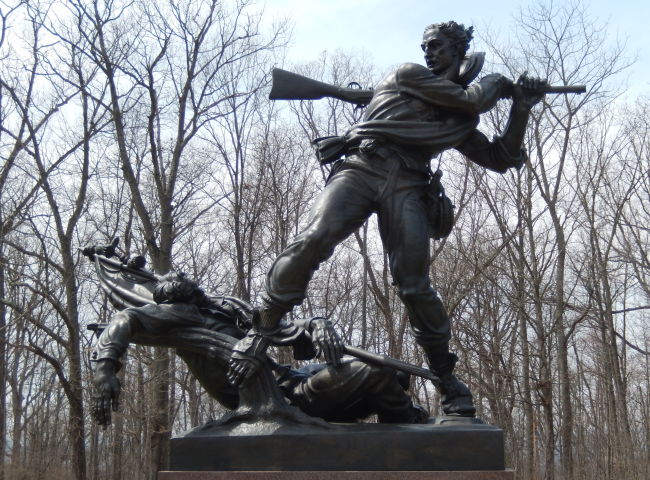
The North Carolina Memorial was one of the early ones, being dedicated in 1929. A wounded officer is shown urging his men forward, while he points to the enemy.

GV-mississippi-memorial

The Mississippi Memorial showing two infantrymen, one mortally wounded and fallen down holding the unit colours, while the other is in the act of defending the colours using his musket as a club, was dedicated in 1973.

GV-louisiana-memorial

The Louisiana Memorial depicts the Spirit of Confederacy holding aloft a flaming cannonball, rising over a fallen soldier – an artilleryman – who grasps a battle flag to his chest. This memorial was dedicated in 1971.

GV-maryland-memorial

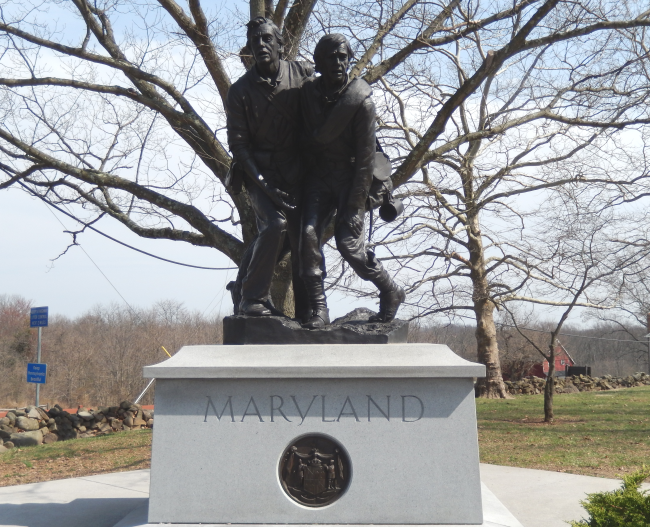
I like the Maryland Memorial very much for its conceptual inclusiveness. It shows two soldiers from Maryland, belonging to the two sides, helping each other. Also, a bronze tablet at the base lists the Maryland commands in both armies. This memorial was dedicated on 13 November, 1994.

GV-confederate-memorial

You will also find a memorial to the soldiers and sailors of the Confederacy, dedicated in 1965, to honour all the men who fought in Confederate armies and navies. It shows a colour bearer urging his fellow soldiers to come forward. On the base are inscribed the names of the states that formed the Confederacy.

GV-eternal-light

The 75th anniversary of the battle of Gettysburg was celebrated with around 2,000 veterans of the Civil War from either side attending. All veterans were invited to attend the function with expenses paid. At the gathering, on 3 July 1938, the Eternal Light Peace Memorial, a monument to peace and national unity, was dedicated by President Franklin Roosevelt. Made of Maine granite and Alabama limestone, the memorial is topped by an eternal light symbolizing the United States.

GV-markers

Markers like these are present all over the place and provide you the most valuable information to understand what passed here, so many years ago.

GV-canons

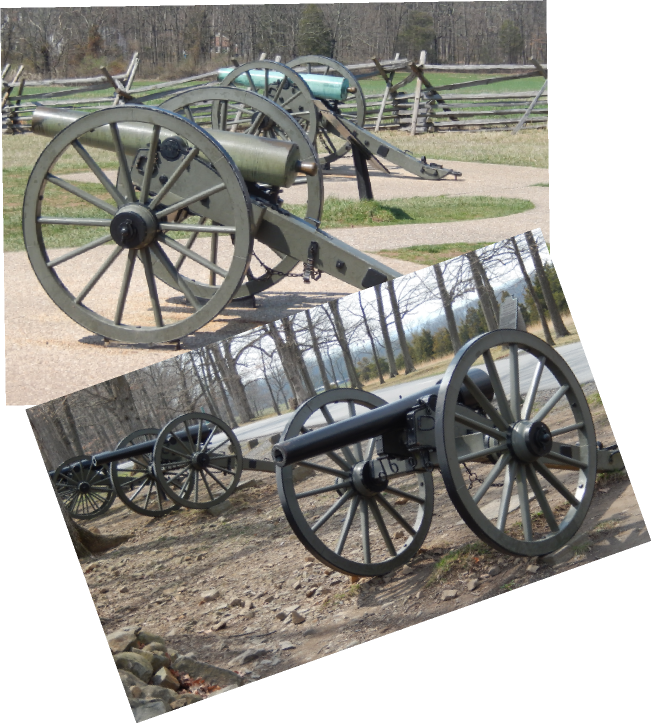
The different types of cannons used at the battle are on display at various locations at the site.

GV-cemetary

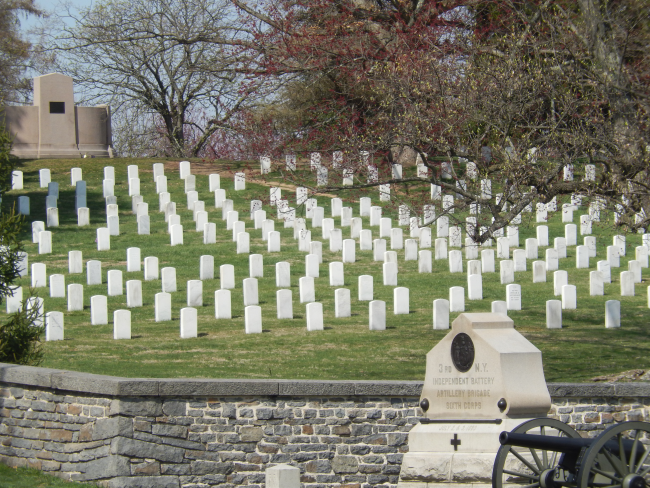
A view of the Gettysburg National Cemetery.

When you start talking about the Civil War and the Battle of Gettysburg in particular, there is so much to talk about… so many interesting snippets. How did General Lee’s estate and home in Arlington turn into the Arlington Cemeteries? What happened with the Schwartz brothers at the McLean House? Why did General Sickles often visit the National Museum of Health and Medicine? So much to talk about. Maybe another post, another day.


~Ria

25 Jul 2014

On the Kindness of Strangers…

At some time or other, we have all been touched by the kindness of strangers. I’m not talking about someone helping you with a heavy suitcase down the staircase at the train station or holding the door for you when you are loaded with shopping bags. Those are actions of the moment, without much thought behind them, more like reflexes of good manners. What I’m referring to are actions that are the results of conscious decisions to help others with no thought of personal gain.
 
The other day I was listening to ‘This American Life’ on NPR, and the story was about unusual acts of kindness by strangers. What was unusual about them was that some of the stories were not even intended as acts of kindness. Like, the guy who walked along the subway platform, telling each waiting passenger that were either in or out. The story goes on to narrate how inspiring it was to be told ‘you’re in’, though it meant nothing and was just a random muttering from a stranger. Was there an intention here to help people feel good? I would rather doubt it, but the end result was that it made others happy.
 
Listening to the stories, I was reminded of an incident, two summers ago, when I was subject to an act of kindness – actually, more like a present – from a stranger.
 
It was around 2 pm and I was waiting for a train to downtown, to meet a friend for a movie. As usual I had a book with me, and sat reading as I was a few minutes early. Suddenly I got this feeling that eyes were upon me and looking up saw this person watching me intently. I looked around; lots of people on the platform, so no need to worry. Ignoring the watching eyes I returned my attention to the book.
 
Time for the train and I got up and walked out. The person approached me smiling and started speaking. It was easy to say, ‘sorry, I don’t speak Spanish’. He extended a small card towards me and kept talking in a mix of English and Spanish. The only words I could get were… ‘for you… books… to read’. He pushed the card into my hand. I looked down and saw that it was a Barnes & Noble gift card. Like a true New Yorker I thought… Oh, the guy wants to sell me the card – probably blank. Yeah, right!
 
By this time, the train was approaching the platform. I tried to give the card back to him. But he wouldn’t take it and kept explaining. What I could grasp from his talk was this: he was a visitor to the city and was going back that day. Did not have time to use the card, and so wanted to give it to me.
 
The train doors were open, and it was easier to say ‘thank you’ and get in to the train than continue arguing with him. And I was careful to sit far away from where he sat. I pushed the card into the book I was reading.
 
I did not think of it further till I was passing in front of the Barnes & Noble store on Broadway (which has since closed). Went in and checked to see if the card was of any value. How much do you think was on that card? 78 dollars! I was amazed, to say the least. And truly felt ashamed at being so suspicious of the guy’s intentions!
 
Why did he pick me to make a present of the card? I cannot make a guess, except maybe it was because I was the only one reading a serious book on the station platform.
 
I still remember two of the books I bought with that card… ‘Unaccustomed Earth’ by Jhumpa Lahiri and ‘Half Asleep in Frog Pajamas’ by Tom Robbins, both of which I thoroughly enjoyed!

20 Jun 2014