A Weekend in Stamford

Stamford, Connecticut… where the rich and famous live… so you must surely be one of them… that is how I used to tease my friend Archana (of The Perfect Zest), who lives there. Though I have visited her many times, never really found the time to explore the town. So when she invited me to spend a weekend at her place, with a promise to show me around, I jumped at the chance.
 
The town of Stamford was founded in the year 1641. Originally called Rippowam, after the local river, by the natives as well as the settlers, the name was later changed to Stamford – meaning stony ford – after a town in Lincolnshire, England. At that time, the settlement measured 128 square miles, though the area of Stamford at present has come down to 40 square miles.
 
In the early years, the town’s economy was based on agriculture, facilitated primarily by the New York City markets. After two centuries, the agri-economy slowly gave way as manufacturing picked up in the 1840s and Stamford became an industrial center. Today, Stamford is home to major corporations, financial institutions and capital market players.
 
Stam-chairs

Downtown Stamford is quite impressive, in a charming and bit quaint way. And colourful… especially with all those benches, part of an outdoor sculpture exhibition consisting of 40 originally designed and painted wooden benches. These benches are placed throughout Stamford downtown and at the Stamford Town Center.
 
Stam-bull

Also, on Bedford Street in downtown, you will see a replica of the famous Wall Street Bull, created by the same artist.

Stam-from-parking

The afternoon saw us heading to the Cove Island Park for a well deserved relaxing time, tired after a long lunch downtown. The park is right on the shore, with extensive walks and sandy beaches.
 
Stam-ocean4

Sitting under the trees on a bluff overlooking the Long Island Sound, with the breeze wafting softly over the water, New York city and its salt mines where I toil every day seemed far away!
 
Stam-ocean1

Cove Island Park offers several facilities like walking trails and cycling paths, we were too lazy to even consider any of those. Except walk a bit along the rocky shoreline, watching the avid fishers – human as well as birds – in action.
 
Stam-ocean3

If anything could get up out of the lethargy, it was the thought of the beer and burger picnic we had planned. What a wonderful evening indeed!
 
Stam-ocean2

Next morning, we went for a walk in the Mianus River Park… yes, I said that with a straight face. 🙂
 
Stam-trails

The park is located between Stamford and Greenwich, Connecticut, and has several trails of varying lengths and degrees of difficulty. At this season, everything is green, and so many shades of green too!
 
Stam-50-shades-green

50 Shades of Green!
 
The park extends to an area of 220 acres and consists of different terrains like low lying wetlands – with tiny brooks crossing the trails – and stony steep hillsides.
 
Stam-river-park1

It was pure pleasure walking the trails. One interesting feature of this park is the many rock outcroppings along the trails. Among the old growth trees reaching up to great heights, they really paint a fantastic picture.
 
Stam-rock-outcropping

Like all weekends do, this one too flew away like in a daze. And to think that summer is on the wane… still there is time, and a heap of things to do!


~Ria

22 Jul 2014

Memories of Sandy

Today was a lovely day at the beach! A group of us friends spent the perfect weather day with burgers and beer and overall fun. We stayed till after dark, watching the lights coming on across the bay. From nowhere a cool breeze and a chill descended on us. Such a sudden change! Another reminder of the nature’s unpredictable ways… don’t know why, but my mind went back to the memory of another disaster, a couple years back.
 
I came back from Canada Sunday afternoon, and all the talk (on TV, people at the airport, the newspaper waiting for me) is about Hurricane Sandy, which was supposed to hit us on Monday. Our apartment building is right on the banks of Passaic River, only a road separating the two. And the river was sure to get some storm surge; only question was how much. Estimates went up to 9-11 feet. The lower floor of the building is the parking lot, which was sure to flood. So Sunday night we took our cars to a parking garage at a higher location. I went out and bought non-perishable food like rolls-buns-muffins-cupcakes-pretzels-chips-cookies-chocolates-peanut butter-jams-jellies-fruits etc. And lots of water too. Candles, LED lights, matches all ready.
 
The wind is going hard whole day; rain too. By around 6.30, the wind quiets down and I’m like ‘Okay, so that’s all. Much ado about nothing.’ Spot on at 7, the lights go off. So I light up some candles and settle down to read my book. My house windows face onto Reynolds Avenue, and in about 30 minutes I see cop cars with their lights on, on that road. They are placing traffic cones to block traffic on Passaic Avenue, the road in front of our building. So I take a light and go to the front corridor with windows facing front. What I see is water creeping in from the river and flowing along the road. Other people come out of their houses and we all go to the front door. Building’s emergency lights are working fine in the corridors and front lobby. By this time, quite a crowd has gathered in the lobby. Water level in the road keeps going higher and water starts to go up on Reynolds Ave. As we watch, water begins to flow into the garage. The emergency lights last one hour (no one expects a power failure to last more than that!) and now they go out. Pitch dark except for the flash lights and candles. And people whose cars were still in the garage get panicky and they start to move the cars out. Just then, the cops come into the building. They look around, go into the garage… and order us to evacuate. I had only one thing to say… ‘Yeah, right!’ And said that to the cop. There were others determined not to go into the raging storm. So we went back to our homes. Later the cops came banging on each door asking people to leave. I didn’t even bother to open the door.
 
From my window, I could see the cops evacuating people from the houses across the road. By this time it was 8.30. Really felt sorry for those people as surely the water will recede as soon as high tide gets over after 9. Six houses… The saddest was when they had to carry an old lady on a portable stretcher. The funniest was when one family came out with their dog without a leash, and the dog started running around in the water with four cops and the dog owners running after it! The cops had even brought a small boat! They tried using it, but the bottom kept scraping the road surface as there was not enough water. Soon they put it back on the fire engine which was standing by too.
 
At 10, when I was ready for bed, the river water had started flowing in the opposite direction, back to the river taking all the debris with it. At 12.30, when I got up to take a look, the road was completely dry.
 
For the rest of the week, we had no electricity. No fridge, no TV. No telephone; no way to charge the cell phone. The weather is very cold, and no heating. Fortunately, we survived all that. For a week, I wasn’t able to fill gas in my car as there was no gas and the lines were so long where it was available. No way to get to work for a week… even if we could get there the office was not open as parts of downtown Manhattan still did not have power.
 
And my beloved Jersey Shore was in shambles, along with all the beach areas in Queens and Staten Island…
 
Life goes on…

~Ria


18 Jul 2014

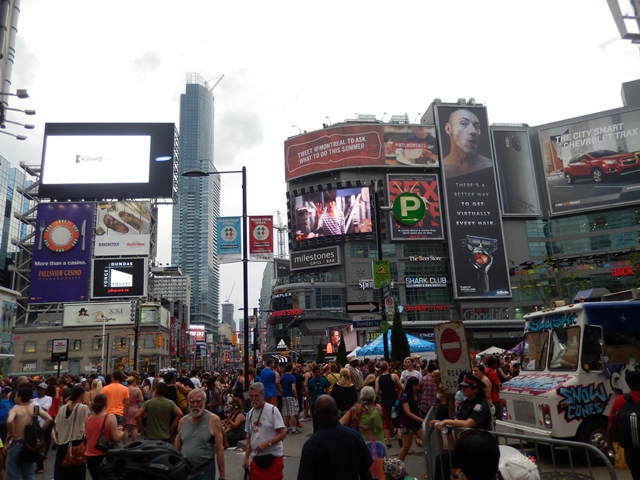
Yonge-Dundas Square-The Heart and Soul of Toronto City

Quiz a visitor or a new resident in TO, on the first place they have been to in the city and you will invariably find the answer is ‘Yonge-Dundas Square’. (Of course, some crazies go elsewhere! 🙂 ) Following the majority, it was also my first destination downtown. The most happening place in town that sure stands up to its name! I don’t even remember the number of events I have attended there. Most cultural and music events either start or end there; Nuit Blanche and Pride Parade to name a few among the many.

YD

I was surprised to find that the Yonge-Dundas Square came into being only in 2002. Planned in 1997, it was designed by Brown + Storey Architects, and constructed as part of the Yonge Street Regeneration Project, managed by the Toronto City Council and the city residents, making it a one-of-a-kind public-private partnership. It was developed at the intersection of Yonge Street and Dundas Street East in downtown Toronto.

On the lines of New York’s Time Square, this public square is also decked with colorful LCD and LED screens and panels, digital displays and advertisements and neon signs. The true charm of this eye-catching scene comes alive only at night. The square has granite flooring and a stage made out of stone meant for concerts and adequate seating with overhead canopies.

Surrounded by famous and known buildings, facing east is the Toronto Eaton Centre, a fancy and expensive shopping mall, which is a major attraction for mall tourists (who outnumber the regular tourists these days!)

Facing north of the square is 10 Dundas Street East, a structure that houses a multiplex and many grill restaurants. Of particular note is Jack Astor’s lovely patio restaurant that overlooks Dundas Square. Providing a lovely view and blending tasty food with excellent customer service, it sure offers an awesome ambience. As the most popular restaurant in the area, they are usually busy. I always look forward to going there.

Recently, the world cup euphoria took me to Shark Club, a sports bar in the same building and all I remember is that I left the place happy. Well, blame the match for the single-minded focus!

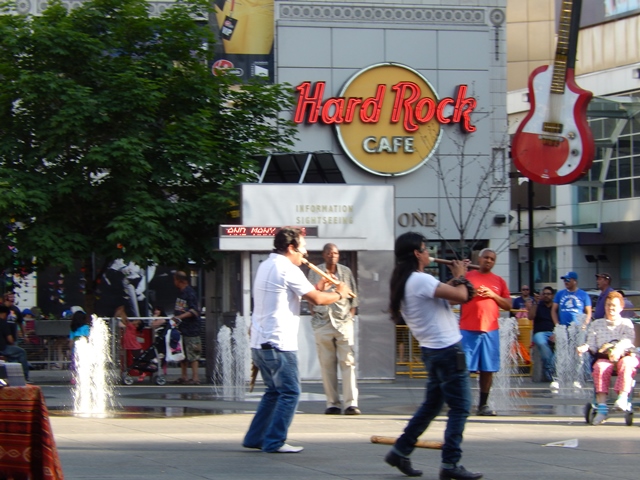
South of the square is the building that has Hard Rock Café which I wanna visit sometime soon. Mainly to add one more to the collection of Hard Rock tees that I have stashed away from around the world! Then there are other commercial buildings around like a studio, Atrium on Bay, and the City TV building.

Yonge-Dundas Square is the place where the PATH system begins. A long, underground labyrinth of shops, food courts, and restaurants that will lead you to Lakeshore Boulevard in case you did not already lose your way. The PATH sustains offices all across this area, spanning 29 kilometres. Another unique feature at Yonge-Dundas is the pedestrian scramble, an intersection where pedestrians can cross the road in all directions even diagonally. The traffic lights guide you on when to cross.

YD_Square

Now that’s a short preview of what you can expect when you are ambling along this popular landmark next time.

15 Jul 2014

The Cloisters Museum and Gardens

Every person in the city, whether a native New Yorker or a visitor, has heard of the Metropolitan Museum. And a majority would have been there too, at least once. But that is not the case with the Cloisters, located at the top of Manhattan. Though it is a branch of the Met, not many people are familiar with this unique museum.

CMG-building

The Cloisters Museum and Gardens is focused on the art and architecture of medieval Europe, mainly from 12th to 15th centuries.

CMG-ceiling2

In fact, the whole place is designed on the architectural principles of a cloister in medieval Europe, though not modelled on any particular one, instead borrowing features from many.

CMG-pillars

When you see the museum, you will realise the appropriateness of the name as cloisters were living spaces for the monks, attached to cathedrals and churches in medieval European history.

CMG-ceiling

The building with its stained glass windows and column capitals truly exudes an aura of grandeur and you feel like you are stepping into a long gone age of chanting monks leading a secluded life.

CMG-pillars2

Among the decorative and liturgical art collection from various parts of Europe on display are illuminated manuscripts, stained glass, metalwork, enamels, ivories, and tapestries.

CMG-art1

Most renowned among them are a series of seven tapestries, ‘The Hunt for the Unicorn’, commonly known as the Unicorn Tapestries.

CMG-unicorn

These tapestries tell the story of how the unicorn is captured and killed, yet alive again and happily living in captivity. Leaving aside the allegorical allusions aside, these tapestries are full of rich details. Over a hundred plants and flowers are shown in detail, each bearing a significance to the story. A trip to the Cloisters is worth just to look at this set of tapestries; they are so rich and wonderful.

CMG-flowers

The gardens at the Cloisters are unique in the sense that they are aligned with the culinary arts. There are all kinds of plants, fruit bearing trees and herbs used in the preparation and flavouring of food. Also, there are many medicinal plants as well. These are plants that played a prominent part in the daily lives of the people living then.

CMG-trees

For example, you will see woad, weld and madder plants that were used in the dyeing of material in blue, yellow and red respectively. And remember, these are the colours used to colour the threads in the tapestries that we just spoke about.
 
Intriguingly, there is a section of the garden devoted to poisonous plants! Of course, these plants too had medicinal qualities in the right hands, but the medieval background reminds one of many a story of intrigue and treason where poison played a main role.
 
These gardens have been planned and laid out to replicate a cloistered garden in the medieval times, based on horticultural information found in medieval treatises and poetry, and garden documents and herbals. A herbal, by the way, is a book containing descriptions of plants put together for medicinal purposes.

CMG-view

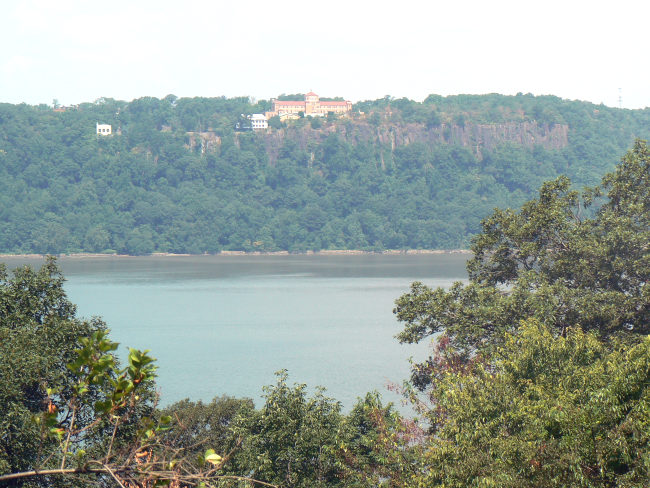
And the view… Did I mention that the Cloisters is located overlooking the Hudson? From the walks around the gardens, the view of the cliffs across the river is awesome!

CMG-geo-wash-bridge

Included in the view is the George Washington Bridge stretching across to New Jersey.

CMG-walks

Opened on May 14, 1938, the museum is celebrating its 75th anniversary this year. And what better occasion than this to make a visit to the Cloisters Museum and Gardens? And the summer is the ideal time to pack a picnic lunch and spend a glorious day at this museum.


~Ria

11 Jul 2014

Technology and I: Past and Future

Technology became an important part of my life the day my mom brought home a computer for her work. This was while I was in high school. Though it was meant for her, I was at the computer most of the time, playing games. Suddenly, the world of gaming took my fancy with the Prince of Persia, Dangerous Dave, and Duke Nukem becoming my heroes in real life. I was thoroughly fascinated by their superpowers and their abilities to sprint and fly. Those were the good old days of DOS games, which I still miss.

Then, came the Windows-based games like Minesweeper and Solitaire, which always kept me pre-occupied in between classes or on boring assignment days. I was comfortable using the computer and was interested in learning to use more programs. So, I worked at becoming proficient in the Microsoft suite and also, dabbled in using the graphic design tools.

Another major encounter with technology took place when I got my car. It was a Maruti Suzuki 800. Driving an automobile made me aware of the mechanics of engineering products. My fascination towards cars grew. I loved driving my car and taking care of it. I used to particularly enjoy taking it to the garage for servicing and listening to the mechanic’s assessment of its condition. ‘Trudy’ was the apple of my eye and received a lot of attention and care.

These days, an iPod and a cell phone are integral parts of my handbag…the way technological gadgets have become indispensable to all of us. The Android mobile phone I carry is a prime example of technological advancement as I can not only make and receive calls and text messages but also surf the Internet, check e-mails, use the GPS functionality, and watch high-definition videos on my phone.

Over the past two decades, telecommunications technology has evolved from standalone voice and data communication to image, video, and multimedia, providing a communication backbone to our society. Wired and wireless communication has converged for this integrated system, leaving transmission cables extraneous and redundant. This gives way to a cheaper, more efficient way for exchange of information and data.

Ex-IBM CEO, Louis Gerstner, had once predicted that computing capabilities will be embedded in everything from clothes and wall paints all the way to big robots and apparatus.

Currently, we have an abundant number of devices and applications directed towards keeping in touch with our fellow human beings. Social media like Facebook and Twitter connect our lives, interminably, with others. We no longer go to bookshops or buy newspapers; the online subscription newsletters and the e-book readers like Amazon Kindle and Apple iPad, present us with the latest dose of news, staying within the comforts of our homes.

I believe the future lies in an all-Internet Protocol (IP) network, a single network on which everything travels as interleaved streams of IP packets, where you can use the same device to control all your electronic equipment within your home and workplace, backed by a smooth flow of IP traffic.

This next generation network technology constitutes an amalgam of Internet technologies and telecom infrastructure, accompanied by Long Term Evolution (LTE), a standard in high-quality wireless communication.

My technological wishlist would definitely contain an Apple home theater system since I am completely gaga about movies and I believe Apple makes the best computer hardware and software.

08 Jul 2014